

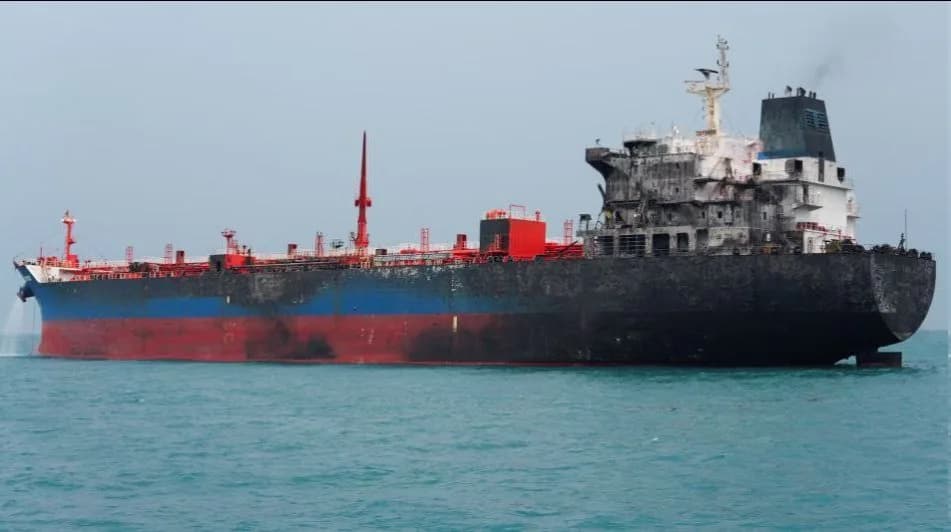
A limited easing of tensions in global oil supply has emerged after Iran permitted the passage of 10 oil tankers through the strategically critical Strait of Hormuz, offering what market participants describe as a cautious but notable shift in the ongoing energy standoff.
The development was disclosed by Donald Trump during a cabinet meeting, where he characterised the move as a “gesture” from Tehran amid continuing negotiations between both sides.
While full operational details remain unclear, the vessels are believed to be foreign-flagged, with indications that some may be linked to Asian trade routes. The White House has yet to provide confirmation on cargo specifics or whether additional tanker movements will follow.
Industry analysts say the passage of 10 vessels, though limited, signals a controlled adjustment rather than a full reopening of the waterway. For weeks, transit through the Strait has been tightly restricted, with Iran allowing selective cargo movements under a monitored framework.
The Strait of Hormuz remains one of the most critical arteries in global energy trade, accounting for roughly 20 per cent of worldwide oil flows under normal conditions. Disruptions in the corridor have contributed to sharp imbalances between physical oil supply and benchmark pricing, with traders reacting to constrained cargo availability.
Market observers note that the latest development may provide short-term relief, particularly for Asian buyers who have faced mounting supply pressure. However, the scale of the reopening remains insufficient to normalise global trade flows.
Rather than a full de-escalation, analysts interpret the move as a strategic signal. By allowing limited transit, Iran appears to be maintaining leverage over global oil logistics while demonstrating a degree of flexibility to sustain diplomatic engagement.
The controlled access underscores a broader shift in market dynamics, where physical oil movement is increasingly influenced by geopolitical positioning rather than purely commercial factors.
With negotiations still ongoing, traders are expected to closely monitor tanker activity through the Strait, as even marginal increases in flow could influence price direction and supply expectations in the days ahead.