

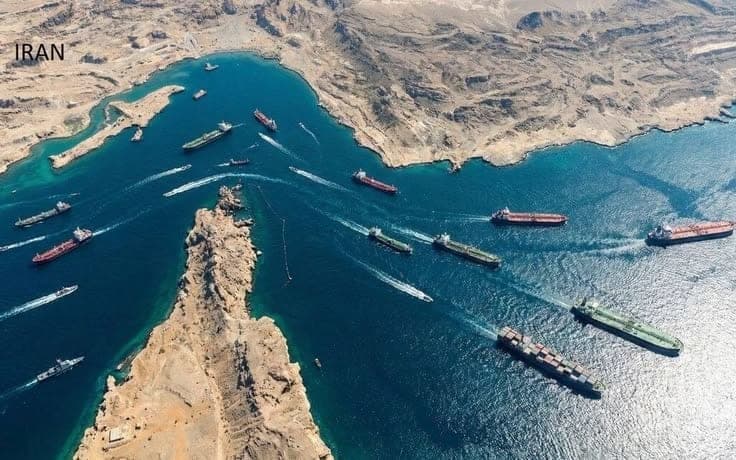
Tanker and commodity vessel traffic through the Strait of Hormuz rose on Monday for the first time since late last week, though volumes remain approximately 90 per cent below the levels recorded before the current conflict disrupted the world's most critical oil shipping lane.
Ship-tracking data from Kpler, reviewed by Bloomberg, showed 24 commodity vessels — including crude tankers, LNG and LPG carriers, and bulk carriers — transited the Strait inbound and outbound on Monday. Before the conflict began, more than 130 vessels passed through the chokepoint daily.
More vessels moved inbound into the Persian Gulf than outbound on Monday, with several supertankers entering the Gulf. The inbound movement is significant because it indicates that oil producers and shipowners are prepared to commit large vessels to the Gulf, expecting to be able to exit fully laden with crude once loading is complete.
The resumption follows a weekend in which the United States Central Command conducted strikes against multiple targets in Iran on Friday and Saturday. The strikes were carried out in response to an Iranian attack on container ship Ever Lovely on Thursday and a subsequent strike on Panama-flagged oil tanker Kiku while it transited the Strait, both of which prompted vessel operators to suspend or delay transits.
Saudi Arabia, the United Arab Emirates, and Qatar have continued loading oil and LNG at their Persian Gulf terminals despite the weekend hostilities. Iran has also resumed loadings from Kharg Island, its principal crude export terminal, following a US decision to waive sanctions on Iranian oil sales until 21 August.
Despite the uptick in traffic, shipowners remain reluctant to commit fully. Argus Media reported that many operators are waiting for confirmation of safe passage conditions and further details on the ceasefire arrangement before attempting transits. Vessels continue to use shipping lanes near Iran's Larak and Qeshm islands rather than the traditional central route.
The diplomatic outlook offers little immediate clarity. Iran's Foreign Ministry spokesman Esmail Baqaei said on 30 June that Tehran would not enter negotiations to end the war until specific conditions are met. "We must evaluate the current process in the coming days and decide based on that how and when to begin negotiations for a final agreement," Baqaei said, adding that any talks are contingent on US implementation of clauses in an existing memorandum of understanding related to the conflict in Lebanon.
The statement came even as US President Donald Trump said Iran had requested a meeting in Doha on 30 June — a claim Iranian officials denied.
The Centre for Strategic and International Studies noted that while some vessels are believed to be transiting with AIS transponders switched off, commercial traffic through the Strait has largely not recovered since the conflict began, with hundreds of tankers still stranded in the Persian Gulf.