

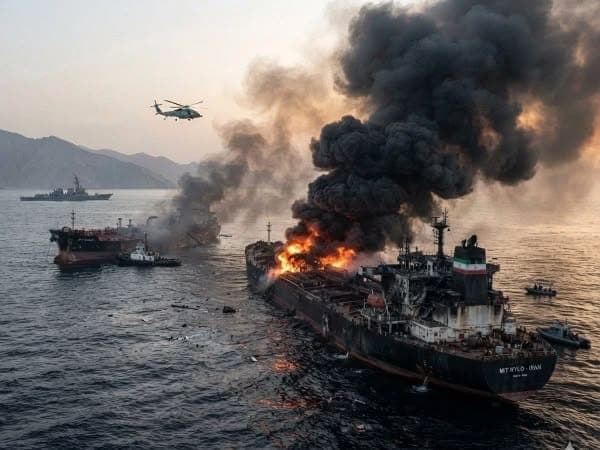
Attacks on commercial vessels in and around the Strait of Hormuz reached a record high in October, with more than 30 crude oil supertankers damaged since the US-Israeli war with Iran began in February.
Data compiled by the Washington Institute for Near East Policy showed 28 confirmed and reported attacks in the Strait of Hormuz and surrounding waterways in October, bringing the total recorded since February 28 to 113.
Noam Raydan, a senior fellow at the institute who maintains its maritime security incident map, said October recorded the highest number of ship attacks on record.
Separately, the International Maritime Organization recorded 120 incidents involving vessels in the Strait of Hormuz and the wider Middle East since the conflict began.
A review of the IMO's incident list and MarineTraffic vessel data identified more than 30 very large crude carriers (VLCCs) damaged during the attacks, including 11 in October.
The affected vessels represent approximately 3.5 per cent of the global VLCC fleet, which comprises more than 900 ships. Each of the supertankers can carry about two million barrels of crude oil.
Greece-based maritime consultancy Marisks described October as the most intense period of maritime attacks around the strait since hostilities escalated in March.
The consultancy reported that 12 ships were attacked between October 5 and 11, the highest weekly total since the conflict began.
Despite the security risks, shipowners have continued loading cargoes in the Gulf, attracted by daily freight rates exceeding $1 million and deeper discounts on crude offered by regional producers against dated Brent.
Raydan said the attacks appeared aimed at slowing the recovery in shipping activity and maintaining pressure on global energy markets ahead of the United States' November midterm elections.
However, the full scale of the incidents may be higher than reported.
The United Kingdom Maritime Trade Operations (UKMTO), which recorded 135 incidents linked to the conflict as of October 16, said insufficient voluntary reporting by shipping companies had made it difficult to capture the complete picture.
UKMTO data also showed a sharp increase in vessel damage during October, underscoring the growing security risks facing commercial shipping in the region.