

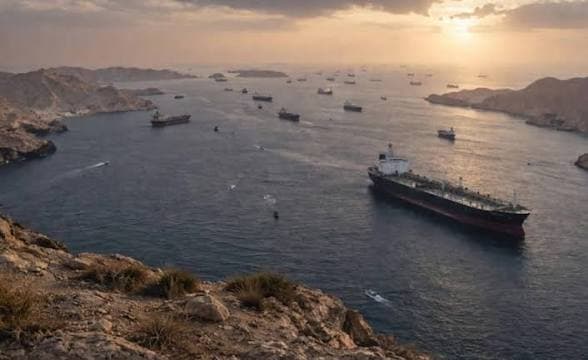
Iran has said the Strait of Hormuz will remain closed until the United States meets conditions set by Tehran, raising fresh uncertainty over the restoration of oil shipments through one of the world’s most important energy corridors.
Mohsen Rezaei, secretary of Iran’s Supreme National Security Council, said Washington must end the war and release Iranian funds frozen overseas before Tehran will agree to reopen the strategic waterway.
As at the time of writing 07:20 am (WAT) Brent crude stood at $89.40 per barrel, gaining 0.55 per cent, while WTI crude was trading at $83.70 per barrel, up 0.60 per cent.
Rezaei also said Iran had communicated additional demands to the United States through mediators, although he did not publicly disclose the details. The position complicates expectations that negotiations involving Iran and Oman could quickly produce an arrangement allowing more commercial vessels to transit the strait.
The development is significant for the oil market because the reopening of Hormuz has become closely linked to expectations of a return to normal crude and petroleum-product flows from the Persian Gulf. Continued restrictions could therefore prolong the disruption affecting regional energy shipments.
The market has repeatedly reacted to signals from the diplomatic process, with hopes of progress towards reopening the strait putting downward pressure on crude prices, while setbacks have renewed concerns over prolonged supply and shipping disruptions.
Iran’s latest position suggests that the maritime issue cannot be separated from the wider conflict. Tehran is linking the reopening of Hormuz to broader political and financial concessions, meaning an agreement on shipping arrangements alone may not be sufficient to restore normal traffic.
The prolonged disruption also presents wider risks for energy markets. Continued constraints on tanker movements can increase freight costs, complicate crude and refined-product deliveries and place additional pressure on countries and companies dependent on Gulf energy supplies.
For oil-producing countries such as Nigeria, sustained disruption could provide support for crude export prices but could also raise the cost of refined petroleum products and other energy-linked imports if international supply and freight costs remain elevated.
The immediate focus is now on whether Washington and Tehran can bridge the gap between their positions. Until there is a clear agreement that results in the restoration of normal tanker traffic, uncertainty over Hormuz is likely to remain a major factor shaping expectations across the global energy market.