

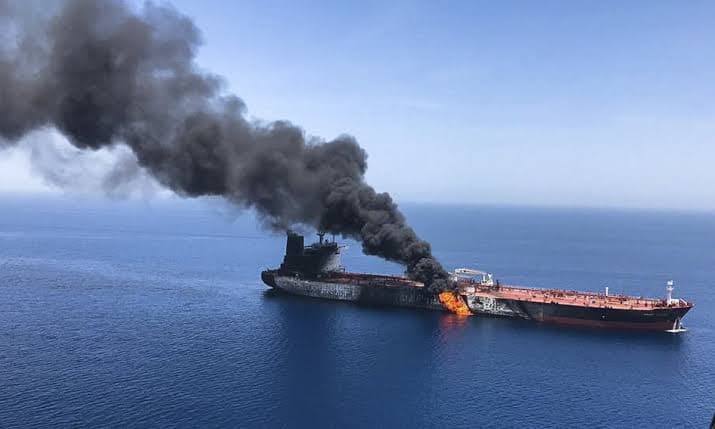
Tanker attacks around the Strait of Hormuz reached their highest weekly level since the Iran war began, intensifying concerns over the security of crude and petroleum product shipments through the strategic waterway and supporting a fresh rise in oil prices.
At the time of writing 05:17 am (WAT), Brent crude was trading at $102.00 per barrel, up 1.82%, while West Texas Intermediate (WTI) stood at $89.64, representing a 1.54% gain.
At least 12 attacks on oil, liquefied natural gas (LNG) and liquefied petroleum gas (LPG) tankers were recorded around the Strait of Hormuz between September 28 and October 5, according to data from three maritime security sources tracking incidents in the region.
The figure represents the highest number of attacks recorded in a single week since the US war with Iran began on February 28, underscoring the heightened security risks facing vessels transiting the waterway.
The incidents included attacks, attempted attacks and harassment involving drone overflights, surveillance and hailing of vessels through VHF radio by Iran’s Revolutionary Guards, according to the US Navy-led Joint Maritime Information Center (JMIC).
“These actions continue to demonstrate Iran’s intent to assert presence along key transit lanes and maintain pressure on transiting vessels,” the JMIC said.
Separate data compiled by the International Maritime Organization (IMO) recorded nine vessel-related incidents during the same week. Maritime sources said the IMO generally takes longer to verify and officially record incidents, explaining the difference between the two datasets.
The escalation comes as Gulf oil exporters have been pushing higher volumes into international markets, with shipping data showing that exports exceeded pre-war levels for about half of September. However, renewed attacks and logistical constraints are clouding the prospects for sustained higher flows.
The impact on shipping has also become increasingly direct. India’s foreign ministry said 12 crew members were injured after an unknown projectile struck the Panama-flagged oil tanker On Peace while it was transiting the Strait of Hormuz.
For the global oil market, the latest attacks reinforce concerns that persistent insecurity around Hormuz could disrupt vessel movements, raise shipping and insurance costs and constrain the flow of Gulf crude and refined products. For Nigeria, any sustained increase in global crude prices could support export earnings, while higher freight and product replacement costs could add pressure across the downstream market.