

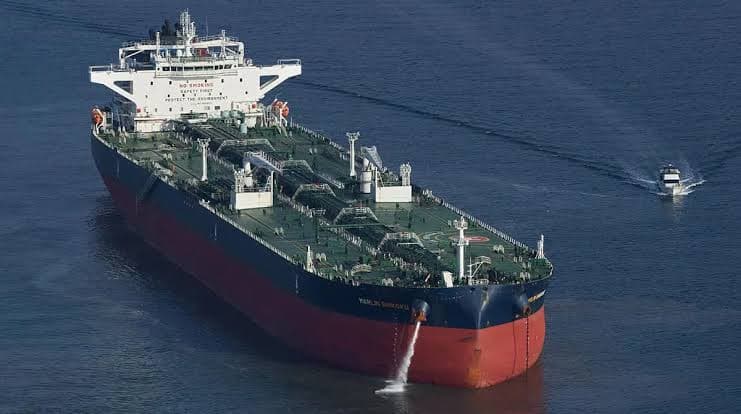
Surging tanker freight rates linked to the Iran war have slashed Asian refiners’ purchases of U.S. crude oil by about 50 percent, threatening to push November deliveries to their lowest level in seven years as shipping costs undermine the economics of long-distance trade.
The cost of transporting crude from the U.S. Gulf Coast to China reached as high as $80 million per voyage earlier in October, roughly ten times the average rates that prevailed before the conflict. Although freight charges have eased from their record peaks, hiring a supertanker for the route still cost about $60 million this week.
Asian refiners have responded by cutting orders for U.S. crude. Their purchases so far in October have fallen to approximately 25 million barrels for November delivery, down around 50 percent from September, according to traders familiar with the transactions cited by Bloomberg.
If buying activity remains subdued through the end of the trading cycle, November deliveries of U.S. crude to Asia could fall to their lowest level in seven years, vessel-tracking analysts estimate.
The decline follows an initial surge in U.S. crude and petroleum exports during the early weeks of the Middle East conflict. However, the disruption to shipping routes and the scramble by producers to move oil out of the Persian Gulf have created a tanker shortage that is increasingly affecting international trade flows.
A major factor is the growing number of very large crude carriers (VLCCs) deployed to transport oil through the Gulf of Oman. Ship-to-ship transfers outside the Strait of Hormuz have become an important route for moving Middle Eastern crude, but the process is keeping tankers occupied for extended periods and reducing the number available for other routes.
According to Kpler, the fleet supporting these transfers has expanded to about 80 VLCCs. Average round voyages have stretched to 23 days, more than twice the optimal nine to 10 days for a return trip between Iraq’s Basrah and the offshore area near Sohar, Oman.
The lengthy voyages have tightened vessel availability across the market. At the same time, exceptionally high freight earnings from Persian Gulf and Gulf of Oman operations are attracting more tankers to the region despite the risks, further reducing supply for routes such as the U.S. Gulf Coast to Asia.
Randy Hawkins, Valero Energy’s vice president of international crude oil supply and trading, said freight costs had become a dominant factor in global oil pricing.
Speaking during the U.S. refiner’s third-quarter earnings call, Hawkins said shipping a VLCC from the U.S. Gulf Coast to Asia was costing an average of $30 to $35 per barrel, compared with about $5 per barrel in 2025.
He said the increase was causing major distortions in crude pricing as refiners sought supplies closer to their facilities, while sellers had to lower prices to compensate for the expense of transporting oil over longer distances.
Asian buyers have increasingly turned to Middle Eastern crude, with some opting for delivered purchases to limit their exposure to shipping costs. European refiners are also favouring supplies available within or closer to their region rather than paying elevated rates for distant cargoes.
The shift towards nearby supplies has strengthened prices for some crude grades. Dated Brent, a key benchmark for physical crude oil, reached a record premium of $20 per barrel to Brent last week.
Norway’s Johan Sverdrup medium-sour crude also commanded a record premium of $24 per barrel to Brent, according to Wood Mackenzie data. The consultancy linked the increase to disruptions affecting Saudi Arabia’s pipeline system, which have tightened the availability of competing crude supplies.
In contrast, producers in the United States and Africa have faced weaker premiums and deeper discounts as buyers factor in the cost of shipping their crude to Asian markets.
West African crude grades have seen discounts widen to record levels, with some selling at as much as $20 per barrel below the relevant benchmark to offset the expense of long-distance transportation.
U.S. crude has experienced similar pressure. At the Midland East Houston hub, the premium for West Texas Intermediate crude fell to about 25 cents per barrel above WTI, compared with more than $3 per barrel in early September, according to Link Data Services estimates cited by Bloomberg.
Mars crude from the U.S. Gulf of Mexico, a medium-sour grade comparable with several Middle Eastern oils, also saw its premium decline to $6 per barrel from $17.50 at the end of March.
The widening price differences reflect a market increasingly shaped by the cost and availability of shipping rather than crude quality and production costs alone. Buyers are paying more for grades that can be delivered quickly, while sellers dependent on lengthy voyages are having to absorb part of the additional transportation expense through lower prices.
The disruption highlights how the Iran war has expanded beyond a supply crisis into a broader shipping problem. Even where crude remains available, limited tanker capacity and expensive freight can make it uneconomical to move oil between major producing and consuming regions.
For U.S. producers, the steep cost of reaching Asian buyers threatens to weaken export demand and place further pressure on domestic crude premiums. For refiners, the incentive is shifting towards nearby supplies, while Middle Eastern and European grades that can be delivered more economically are gaining value.
Unless tanker availability improves or freight rates decline substantially, the imbalance could continue to redirect global crude flows, widen regional price differences, and leave U.S. and African exporters facing greater pressure to discount their barrels.