

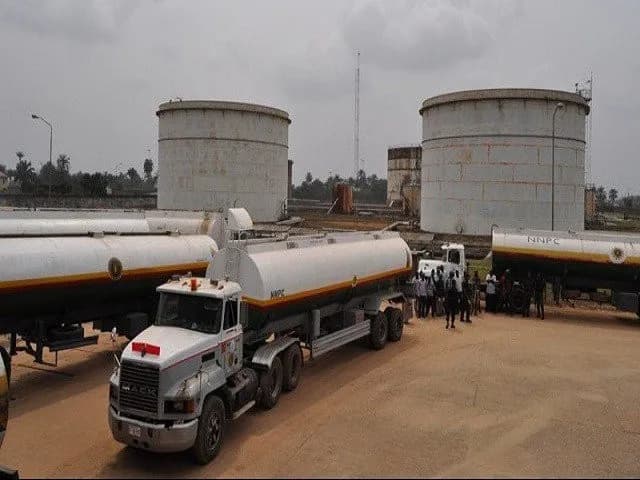
Fuel price declarations at Lagos depots plummeted on Monday, June 16, 2025, as the strike by petroleum tanker drivers disrupted operations across the state. Out of about 30 operational depots, fewer than five published official prices for petrol (PMS) and diesel (AGO).
The strike, led by the Petroleum Tanker Drivers (PTD) arm of NUPENG, has choked fuel logistics and hindered product evacuation. As a result, many depot operators refrained from fixing prices due to uncertainty in product movement and low loading activity.
Few Depots Push Through with Pricing
Despite the bottleneck, three depots, Dangote (₦838 PMS, ₦1,020 AGO), Rainoil (₦900 PMS), and NIPCO (₦895 PMS, ₦1,050 AGO), managed to declare rates, ensuring limited supply continuity for buyers navigating the disrupted market.
Majority of Depots Remain Silent
Most depots did not release prices. These include prominent players such as Emadeb, Pinnacle, Aiteo, Menj, First Royal, Gulf Treasure, and others. Operators blamed the strike for stalling haulage and disrupting daily logistics, leaving no clear basis for pricing decisions.
A depot manager said, “This strike is paralyzing the entire distribution system in Lagos. Without trucks to lift products, setting prices becomes pointless.”
Mounting Pressure on Supply Chain
The disruption is starting to affect retail stations, especially those that rely on daily replenishment from Lagos depots. If the strike drags on, analysts expect shortages in urban centers and possible price spikes once supply resumes.
Tanker drivers are protesting against multiple levies, extortion by security personnel, and alleged harassment around key routes, including those near Dangote Refinery.
Background and Industry Concerns
The strike reflects wider frustrations in the downstream sector. Drivers say state-level haulage fees and unchecked enforcement practices inflate costs and delay deliveries. Stakeholders warn that unresolved disputes could deepen Nigeria’s fuel supply challenges.
Government officials and union leaders have opened dialogue, but no resolution has emerged.