

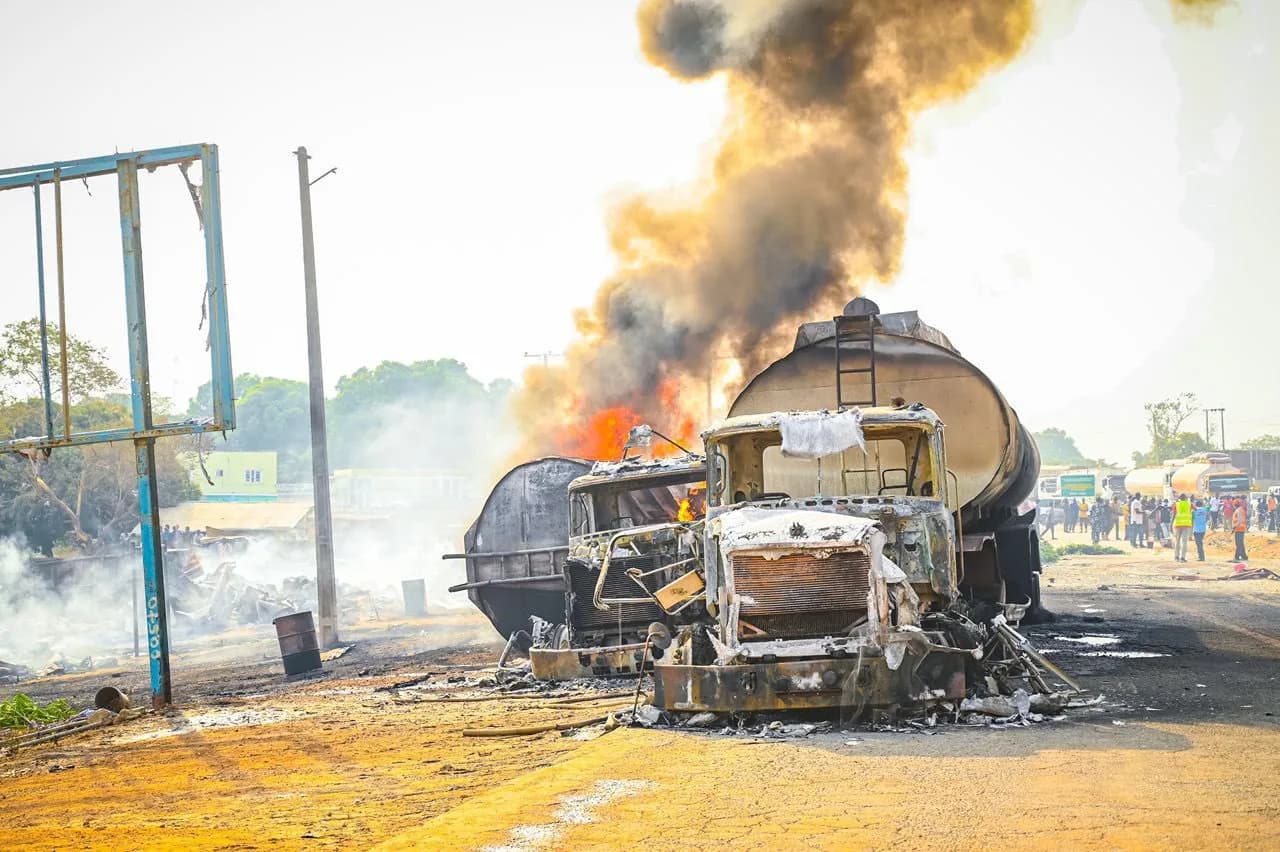
Tanker explosions are among the most catastrophic incidents on Nigerian roads, leaving devastating impacts on lives, property, and the environment. As one of Africa’s largest oil producers, Nigeria’s dependency on road transportation of petroleum products has made these tragedies a recurrent challenge. Here’s all you need to know about tanker explosions, their causes, consequences, and preventive measures.
What Are Tanker Explosions?
Tanker explosions occur when petroleum-laden tankers are involved in accidents or malfunctions that lead to the combustion of their highly flammable contents. The result is often an inferno that spreads rapidly, endangering lives and destroying property within the vicinity.
Such incidents are particularly common in urban centres, high-traffic roads, and highways leading to Nigeria’s major depots and refineries, including Lagos, Port Harcourt, and Warri.
Common Causes of Tanker Explosions
- Poor Vehicle Maintenance
Many tankers plying Nigerian roads are old and poorly maintained, with faulty brakes and engines being leading causes of accidents. Mechanical failures often trigger fires when combined with the flammable nature of petroleum products. - Driver Error and Fatigue
Reckless driving, overspeeding, and fatigue are significant contributors. Drivers working long hours under intense pressure are prone to mistakes that lead to accidents. - Bad Road Infrastructure
Nigeria’s road network is notorious for potholes, erosion, and poor design. Tankers often overturn when navigating these hazardous conditions, leading to spills and explosions. - Overloading
Overloaded tankers are harder to control, increasing the risk of accidents. Additionally, excessive weight can compromise the structural integrity of the vehicle, making it more prone to mechanical failure. - Lack of Safety Regulations
The lack of stringent enforcement of safety regulations for transporting petroleum products contributes to frequent mishaps. Tankers often operate without proper checks and monitoring.
Impacts of Tanker Explosions
- Loss of Lives
The death toll from tanker explosions in Nigeria remains alarmingly high. In 2024 alone, over 300 fatalities were reported from such incidents across various states. - Property Destruction
Explosions often engulf vehicles, buildings, and businesses within the vicinity, leaving behind extensive damage. Lagos and Anambra states have witnessed some of the most destructive tanker explosions in recent years. - Environmental Pollution
Spilled petroleum contaminates soil and water sources, while the release of toxic fumes from explosions poses severe health risks to nearby communities. - Economic Losses
The destruction of goods and infrastructure, coupled with increased insurance claims, leads to significant economic losses. For many small business owners, the impact can be financially crippling.
Preventive Measures
- Improved Road Infrastructure
Governments at all levels must prioritise the rehabilitation and expansion of roads to accommodate heavy-duty vehicles safely. - Regular Vehicle Inspections
Tankers must undergo mandatory inspections to ensure roadworthiness, with strict penalties for operators who fail to comply. - Driver Training and Regulations
Comprehensive training programmes for tanker drivers, coupled with stricter regulations on working hours, can reduce accidents caused by human error. - Emergency Response Preparedness
Enhanced fire-fighting capabilities and quick response times can mitigate the damage caused by tanker explosions. States like Lagos have invested in emergency services, but more needs to be done nationwide. - Public Awareness
Educating communities about the dangers of siphoning fuel from fallen tankers is crucial. Such practices have led to several avoidable fatalities during explosions.
Recent Statistics and Trends
In 2024, tanker explosions were reported in over 20 Nigerian states, with Lagos, Rivers, and Anambra being the most affected. These incidents resulted in over 300 deaths, hundreds of injuries, and billions of naira in property damage.
Tanker explosions remain a significant challenge in Nigeria, requiring concerted efforts from government agencies, petroleum marketers, and road users. By addressing the root causes and implementing stringent safety measures, the country can reduce the frequency and severity of these tragic incidents.