

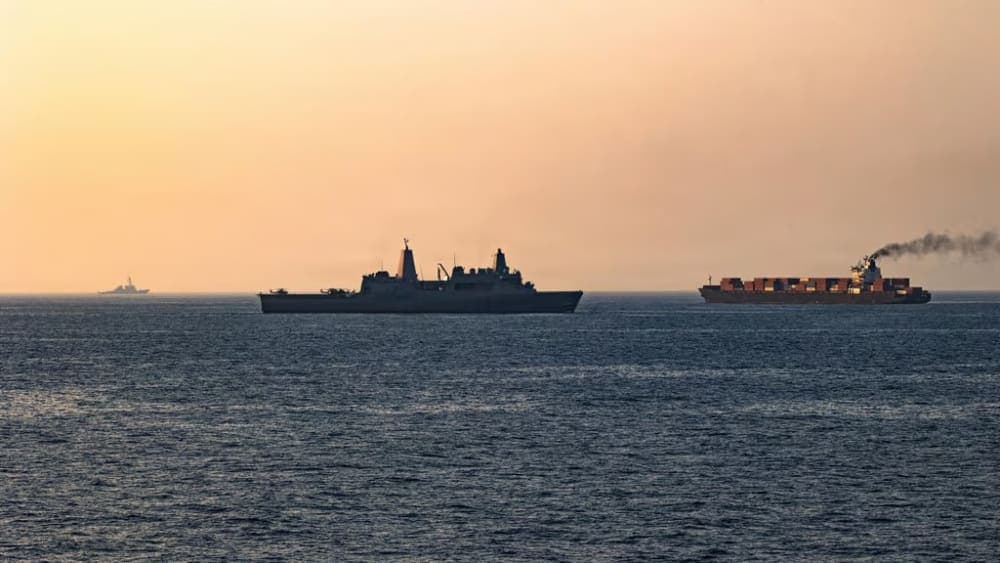
Cargo vessels and tanker operators are once again facing uncertainty in the Strait of Hormuz after the United States halted its short-lived escort initiative, “Project Freedom,” just days after launching it.
The programme, announced over the weekend by Donald Trump, was designed to assist stranded commercial vessels in navigating the strategic waterway amid escalating tensions in the region. Initial operations saw a limited number of ships successfully escorted through the strait under U.S. naval protection.
Among them was the Alliance Fairfax, a vessel operated by a subsidiary of AP Moller-Maersk, which had been held up near the strait since hostilities began in late February. The vessel’s passage had raised expectations of broader relief for shipping operators.
However, that optimism proved short-lived. The U.S. administration subsequently announced a pause in the initiative, stating that the move was intended to allow room for ongoing diplomatic efforts. Despite the suspension, existing maritime restrictions in the region remain in effect.
Following the decision, shipping activity through the Strait of Hormuz declined sharply, with vessel-tracking data indicating a significant reduction in traffic across the corridor.
At the same time, Iran has signalled an expansion of its asserted control over areas surrounding the strait, further complicating navigation and raising concerns among shipping companies about operational risks.
The latest development has left tanker operators scrambling to identify alternative strategies for moving cargo through the chokepoint, which is a critical artery for global oil and gas supply.
Market sentiment has also been affected, with reports suggesting that the United States is working toward a preliminary framework agreement with Iran that could eventually ease restrictions and restore normal shipping flows. Expectations of such an outcome contributed to a sharp drop in oil prices earlier in the day, before losses moderated.
Despite the potential for diplomatic progress, uncertainty remains high, with shipping operators and energy markets continuing to respond to rapidly evolving developments in the Gulf.