

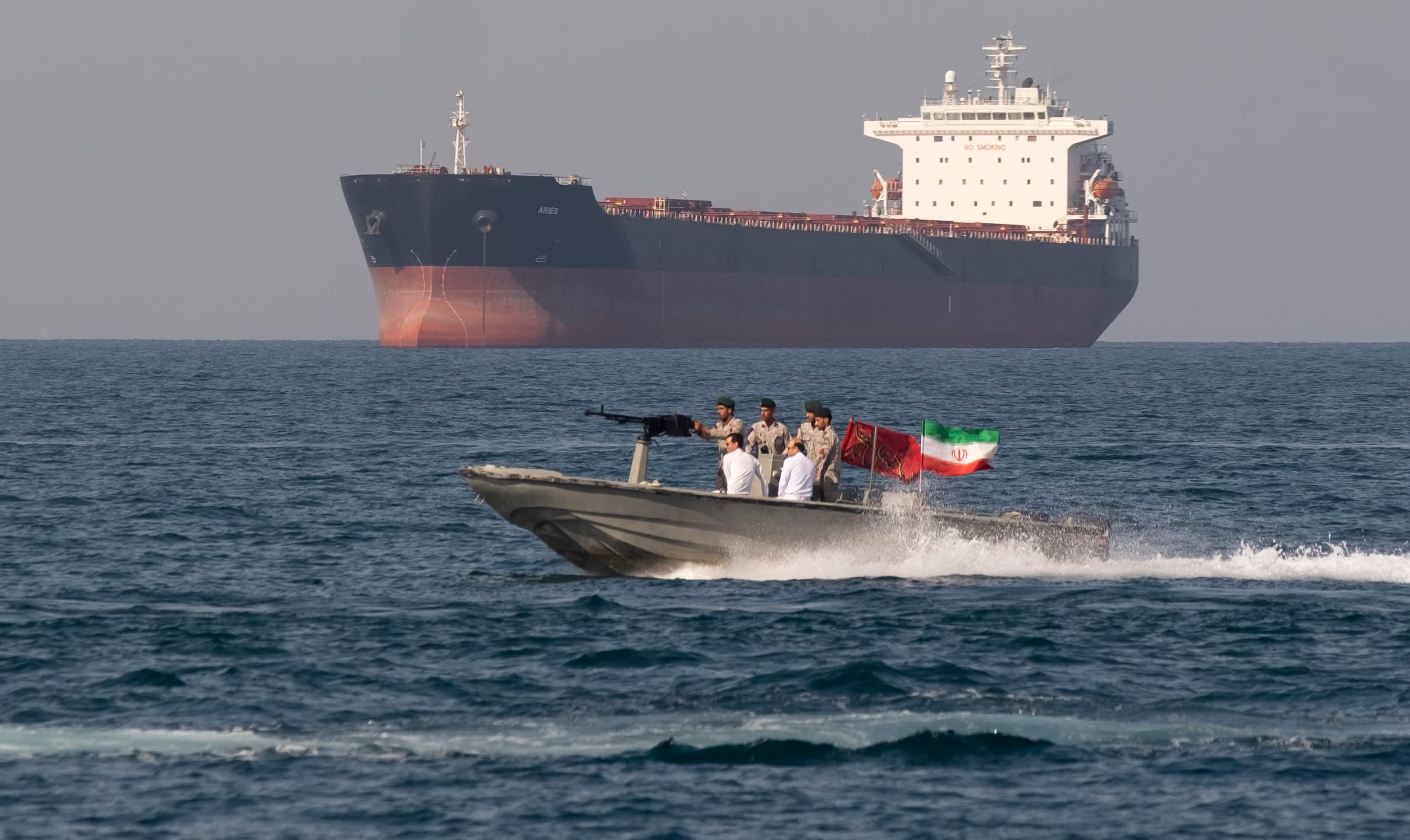
The Strait of Hormuz, one of the world's most strategic maritime corridors, became a focal point of the 2026 conflict involving the United States, Israel and Iran, with Tehran shutting or effectively restricting the vital shipping lane on three separate occasions. Each closure was triggered by a different phase of the conflict, reflecting how the waterway evolved from a geopolitical pressure point into one of Iran's most significant strategic tools.
The narrow channel, which links the Persian Gulf to the Gulf of Oman and the Arabian Sea, normally carries about 20 million barrels of crude oil and petroleum products daily, accounting for roughly one-fifth of global oil trade. Around 20 percent of global liquefied natural gas exports also pass through the route, alongside a significant share of global fertilizer shipments. Before the conflict, nearly 3,000 commercial vessels transited the strait every month, making it one of the world's busiest and most critical energy chokepoints.
First Closure: March 2 Following the Outbreak of the War
The first closure followed the outbreak of the conflict on February 28, when the United States and Israel launched coordinated strikes against Iran. By March 2, Tehran had effectively closed the Strait of Hormuz to most international shipping, allowing passage only to vessels it classified as belonging to "non-hostile" countries and requiring ships to coordinate with Iranian authorities before entering the waterway.
Rather than imposing a conventional naval blockade, Iran relied on threats from drones, missiles, fast attack boats and the possibility of naval mines to discourage commercial traffic. Insurance costs surged, many shipping companies suspended operations through the corridor and vessel movements fell by about 95 percent. The disruption unsettled global energy markets, raised concerns over Middle East crude supplies and forced several countries to introduce emergency measures to conserve fuel and electricity as shipping activity slowed dramatically.
The closure extended well beyond March. Although Iran announced on April 17 that commercial navigation through the Strait of Hormuz would resume under a conditional ceasefire framework negotiated through Pakistan and Oman, the reopening lasted less than 24 hours. On April 18, the Islamic Revolutionary Guard Corps (IRGC) reversed the decision and declared the waterway closed again, insisting that restrictions would remain in place as tensions with Washington persisted. The United States responded by reinforcing its military presence in the region, including the seizure of an Iranian-flagged cargo vessel on April 19, while continuing diplomatic efforts to restore unrestricted navigation. The April 18 action was widely regarded as a continuation of the blockade that began on March 2 rather than a separate closure.
The prolonged disruption highlighted the strategic importance of the waterway, which carries around one-fifth of global crude oil and liquefied natural gas shipments. Roughly 20 million barrels of crude oil and petroleum products normally pass through the channel each day. During the blockade, shipping companies reduced voyages, insurance costs soared, and commercial operators remained reluctant to return even after Iran briefly announced the reopening. Following weeks of negotiations, shipping gradually resumed under the conditional ceasefire, easing pressure on global energy markets.
The uncertainty surrounding the blockade was reflected in crude oil prices. On March 2, when the first closure took effect, Brent crude traded at about $77.74 per barrel while West Texas Intermediate (WTI) stood at $71.23. As the disruption persisted, prices climbed sharply, with WTI reaching $112.41 and Brent $109.77 in early April before extending gains to approximately $106.42 and $114.44, respectively, in early May as concerns over prolonged supply disruptions intensified.
Second Closure: June 21 Following Israeli Strikes in Lebanon
The second closure occurred on June 21 after renewed Israeli military operations in Lebanon. Iran announced that it was once again closing the Strait of Hormuz, arguing that the escalation involving Hezbollah had undermined regional security despite the broader United States-Iran peace framework.
The decision came just before another round of negotiations in Switzerland, where both countries were expected to discuss developments in Lebanon, maritime security, sanctions and Iran's nuclear programme. Iranian authorities linked the closure directly to the deteriorating security situation in Lebanon, saying the renewed hostilities had fundamentally altered the security environment around the waterway.
While the United States maintained that commercial vessels remained free to navigate the strait, the renewed restrictions introduced fresh uncertainty into the recently signed peace framework and underscored the fragile nature of the ceasefire. The announcement revived concerns over global energy supplies, complicated implementation of the diplomatic agreement, and renewed doubts about the reliability of one of the world's most important oil and gas shipping routes.
The renewed disruption also reverberated through global oil markets, although the reaction was more measured than during the initial blockade. On June 22, Brent crude traded at approximately $77.09 per barrel while WTI stood at $73.86, reflecting renewed concerns over the security of Middle East energy exports.
Third Closure: July 12 After Fresh US-Iran Military Escalation
The third closure came on July 12 after another major escalation between Washington and Tehran. The latest shutdown followed attacks on commercial tankers and a renewed exchange of missile and drone strikes between both countries. Iran declared that the waterway had been closed after accusing a vessel of ignoring its designated navigation route and said warning shots had been fired before ordering ships to remain at anchor.
Iranian authorities said the latest shutdown followed an incident involving a commercial vessel that allegedly failed to comply with Tehran's designated shipping route through the strait. The IRGC instructed vessels to remain at anchor and warned that ships attempting to enter the passage without authorization could be treated as cooperating with hostile forces.
The latest escalation followed attacks on three commercial tankers earlier in the week, prompting fresh United States military strikes on Iranian targets. Iran responded by launching missile and drone attacks on United States military facilities and allied countries across the Gulf, including Bahrain, Kuwait, Qatar, Jordan, Oman and the United Arab Emirates, marking one of the broadest regional escalations since the conflict began.
Iran's Revolutionary Guard said the Strait of Hormuz would remain closed until what it described as the end of United States interference in the region, while insisting that vessels must use navigation routes approved by Tehran. Washington rejected Iran's claim that it controlled the waterway, maintaining that freedom of navigation remained protected under international law even as military operations intensified. The renewed confrontation once again disrupted tanker movements, reduced shipping traffic through the corridor and heightened concerns over potential interruptions to global oil and liquefied natural gas supplies.
Energy markets reacted immediately to the renewed escalation. As of 11:30 a.m. WAT on July 12, WTI crude had risen from $71.41 to $81.02 per barrel, while Brent crude climbed from $76.01 to $87.22, reflecting renewed fears that prolonged disruption at the Strait of Hormuz could threaten global oil supplies.
The three closures underscored the strategic importance of the Strait of Hormuz beyond the battlefield. For Iran, restricting access to the waterway became a means of applying military, economic and diplomatic pressure during the conflict. For the United States and its allies, maintaining freedom of navigation remained central to efforts to stabilize energy markets, safeguard international shipping and prevent wider disruption to global trade. Together, the three episodes illustrated how control of a narrow maritime passage repeatedly shaped diplomacy, security calculations and the global energy landscape during the 2026 US-Iran war.