

Nigeria’s federal government has reaffirmed its goal to refine all domestically produced crude oil within the country. This plan is a core part of President Bola Tinubu’s economic agenda, aimed at boosting value creation from natural resources.
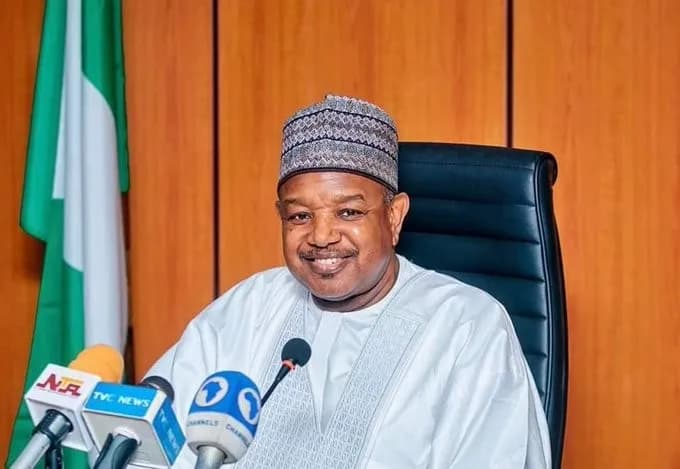
Speaking at the Global Commodity Insights Conference on the West African Refined Fuel Market in Abuja, Minister of Budget and Economic Planning, Senator Abubakar Bagudu, outlined the administration’s ambition. He stated that Nigeria plans not only to refine its own oil but also to help meet the fuel needs of neighbouring West African countries.
“Our aim is simple: process every barrel of crude oil here in Nigeria,” Bagudu said. “We’re also ready to support nearby countries with refined products.”
According to him, years of underinvestment had weakened Nigeria’s oil and gas infrastructure. However, he noted that recent deregulation and policy reforms are already attracting new investments.
“As a result, we’re now building a more investor-friendly environment,” he added. “We expect this to support long-term growth, including double-digit expansion.”
NMDPRA Chief: Tinubu Respects Regulatory Independence
Also speaking at the event, the Chief Executive of the NMDPRA, Farouk Ahmed, commended President Tinubu for maintaining regulatory autonomy. He said the president’s non-interference allows the Authority to enforce policies fairly and effectively.
“This freedom enables us to make tough decisions when necessary,” Ahmed explained. “Even when there is pushback, we stay focused on protecting Nigerians’ interests.”
He encouraged industry players to work with regulators, follow guidelines, and view compliance as a way to ensure market stability.
West Africa to Penalise Dormant Refinery Licensees
In a major regional shift, West African countries have agreed to sanction companies that fail to activate their refinery licenses. This joint action is part of a broader effort to build refining capacity and coordinate regional markets.
According to Professor Zainab Gobir, NMDPRA’s Executive Director for Economic Regulation and Strategic Planning, countries will now track refinery project progress monthly. They also plan to create a unified regulatory framework by the end of 2025.
Key regional goals include:
- Improving output from existing refineries
- Introducing clear and uniform pricing for petrol, diesel, LPG, and aviation fuel
- Attracting new investment through coordinated policies
- Shielding local refiners from unfair international competition
Infrastructure Financing Remains Crucial
Gobir stressed that financial support is still a major barrier. She called on African development banks, private investors, and global institutions like Afrexim Bank to bridge infrastructure gaps.
“The demand for refined products is strong,” she said. “Now we need funding, delivery, and accountability.”
In conclusion, Nigeria’s push to refine all of its crude locally may not only boost national capacity but also redefine the energy landscape across West Africa.