

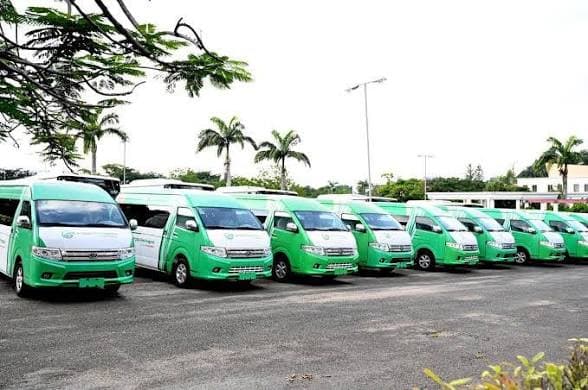
President Bola Ahmed Tinubu has set October 1 as the target date for the Federal Government’s plan to reduce intra-state transport fares by expanding the use of Compressed Natural Gas (CNG) and electric vehicles.
The initiative seeks to lower the cost of operating commercial vehicles and ensure that savings from cheaper alternative fuels are passed on to commuters, who have faced significantly higher transportation costs since the removal of the petrol subsidy in May 2023.
Tinubu announced the plan after meeting state governors at the Presidential Villa in Abuja, where he said the Federal Government and states had agreed to take immediate measures to bring down intra-state transportation costs.
At the centre of the strategy is the Presidential Compressed Natural Gas Initiative, which is aimed at moving commercial and private vehicles away from petrol. Tinubu said more than 120,000 vehicles had already been converted to CNG nationwide, while another 100,000 conversion kits were being developed to accelerate the transition.
The President said CNG-powered vehicles could deliver fuel savings of between 60 and 80 per cent compared with petrol-powered vehicles. The administration now wants those savings to translate into lower fares for Nigerians who rely on buses, taxis and tricycles for daily transportation.
To improve access to CNG, the government is also expanding refuelling infrastructure. Tinubu said more than 100 gas projects were being financed nationwide through the Midstream and Downstream Gas Infrastructure Fund, including 15 CNG mother stations and 86 daughter stations. Four projects commissioned in May are already operating in Lagos, Abuja and Owerri.
The government has further directed the rollout of 500 additional CNG refuelling stations, on top of the 500 previously approved, bringing the planned national network to 1,000 stations.
However, the success of the policy will depend on whether cheaper fuel actually translates into cheaper fares. Transport operators still face significant expenses for vehicle maintenance, spare parts, financing, road conditions, taxes and other levies. Without effective monitoring, lower fuel costs may not necessarily result in equivalent reductions in fares.
Tinubu said the Federal and state governments would establish a joint committee to implement measures aimed at reducing transportation costs, particularly within states. “From October 1, our goal is that Nigerians begin to partake in those savings through lower transport fares,” he said, stressing that “cheaper fuel should result in cheaper fares.”
The October 1 target therefore puts the policy to its most important test: whether commuters will actually spend less at bus stops, taxi stands and motor parks. For millions of workers, students, traders and other Nigerians facing high living costs, the impact will ultimately be measured not by the number of CNG conversions or stations commissioned, but by the fare they pay for their daily journeys.