

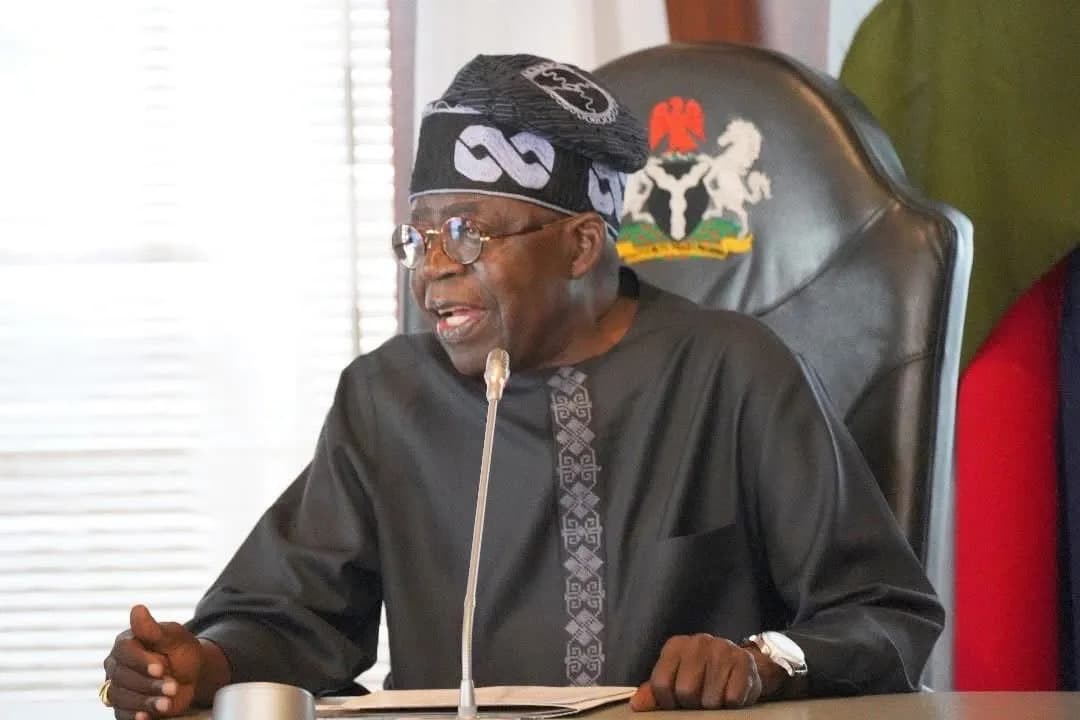
Today, at the Presidential Villa in Abuja, President Bola Ahmed Tinubu struck a tone both solemn and forward-looking as he addressed the long-standing Ogoni cleanup saga. He posthumously conferred the Commander of the Order of the Niger (CON) on the “Ogoni Four” Albert Badey, Edward Kobani, Theophilus Orage, and Samuel Orage slain in 1994 amid deep community tensions.
The President’s words were carefully chosen:
“May their memories continue to inspire unity, courage and purpose among us. I urge the Ogoni people across classes, communities, and generations to close ranks, put this dark chapter behind us and move forward as a united community with one voice.”
But beyond symbolic justice, Tinubu’s speech carried a more pragmatic message: reconciliation must be tied to restoration, and restoration must open the door for prosperity.
Turning Pollution into Prosperity
Tinubu signaled that Ogoniland must not remain a “dead asset.” He declared government’s readiness to resume oil production under new conditions, emphasizing that cleanup commitments will be written directly into future contracts. To operationalize this, he mandated National Security Adviser Nuhu Ribadu to lead negotiations with Ogoni stakeholders, NNPC Ltd., and joint-venture partners.
His words:
“I am encouraged by the overwhelming consensus of the Ogoni communities to welcome the resumption of oil production. The government will deploy every resource to support your people in this march towards shared prosperity.”
For industry watchers, this marks a calculated attempt to align hydrocarbon recovery with environmental remediation an approach rarely seen in Nigeria’s petroleum history.
Progress Report: Where Things Stand
Tinubu’s speech comes against the backdrop of tangible progress, but also visible gaps. The Hydrocarbon Pollution Remediation Project (HYPREP), established in 2016, reported over 130 simultaneous projects by September 2025. Some key figures highlight the scale:
| Project Category | Status (Sept 2025) | Details |
|---|---|---|
| Mangrove Restoration | 75% complete | 560 hectares of degraded mangroves restored, with full completion targeted before year-end. |
| Soil & Groundwater Remediation | Advanced stages | Over 100 contaminated sites treated, many more ongoing since 2024. |
| Infrastructure | 70%+ completion | Ogoni Specialist Hospital and Buan Cottage Hospital nearing handover; Centre for Environmental Restoration at 70%. |
| Socio-Economic Initiatives | Ongoing | 500 postgraduate scholarships awarded in 2025 (up from 300 in 2024); agro-industrial hub under discussion with AfDB. |
These achievements have not gone unnoticed. In February 2025, the United Nations commended Nigeria during the commissioning of water schemes in Beeri and Bunu communities. Environment Minister Balarabe Abbas Lawal has since reconstituted HYPREP’s Governing Council to improve transparency.
The Persistent Gaps
Yet, despite visible gains, critics argue the pace still lags behind the scale of devastation. Groups like Corporate Accountability and Public Participation Africa (CAPPA) note that 14 years after UNEP’s 2011 report, full restoration is far from complete.
Even with SPDC’s $180 million contribution, funding shortfalls remain a bottleneck. Meanwhile, Ogoni activists warn that rushing to reopen oil wells risks “trading ecology for economics.” They insist that remediation must not be sacrificed on the altar of revenue.
This tension underlines Tinubu’s balancing act: how to rebuild trust in a region where pipelines once brought only pain.
Symbolism Meets Strategy
Tinubu’s conferments are not just ceremonial. They are part of a broader reconciliation package. Earlier in June, on Democracy Day, he pardoned and honored the “Ogoni Nine,” including Ken Saro-Wiwa. Today’s honors extend that olive branch further, acknowledging moderates who were also victims of the crisis.
Combined with his call for unity and directive to embed cleanup into oil contracts, Tinubu is attempting a dual-track strategy:
- Restorative Justice: through honors, remembrance, and symbolic healing.
- Pragmatic Economics: through accelerated remediation and renewed oil production under stricter terms.
What Lies Ahead
Tinubu’s challenge is execution. His speech promises much: accelerated cleanup, oil revival, and socio-economic dividends. The people of Ogoniland, however, have heard promises before. They will judge his administration not by honors conferred but by whether mangroves grow back, water runs clean, and hospitals open their doors.
If his words today translate into real soil restoration, functioning infrastructure, and youth empowerment, history may remember this speech as the turning point that finally transformed Ogoni’s pain into possibility.
But if drilling overtakes remediation, the old wounds risk reopening. For now, the President has placed the ball firmly in government’s court with the world watching if Nigeria can truly turn pollution’s curse into prosperity’s blessing.