

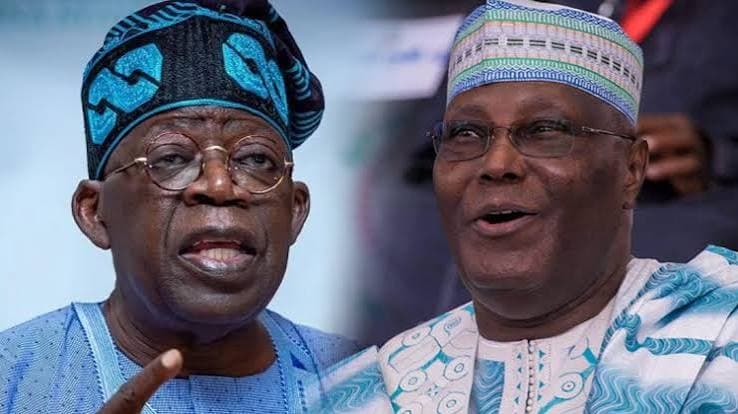
The removal of petrol subsidy by President Bola Ahmed Tinubu in May 2023 remains one of Nigeria’s most contested economic policies, with arguments continuing over its impact on government finances, petrol prices, businesses and households.
While the Tinubu administration has defended the policy as necessary to reduce the financial burden on government, former Vice President Atiku Abubakar has criticised its implementation and advocated an alternative approach centred on domestic refining and targeted government support.
The disagreement has also extended to the question of whether government should continue intervening in the petrol market and, if so, how such intervention should be structured and funded.
President Bola Ahmed Tinubu's Argument
President Bola Ahmed Tinubu has maintained that the removal of petrol subsidy was necessary because of the financial burden the policy placed on the government.
The administration's position is that the previous subsidy regime required government to absorb a significant portion of the cost of petrol, limiting resources available for other public priorities.
Tinubu has repeatedly argued that ending the subsidy would free up funds for distribution to the federal, state and local governments through the Federation Account.
The President has also pointed to increased government revenues following the policy, arguing that states and local governments have gained additional resources to meet obligations such as salaries, pensions and infrastructure spending.
From the administration's perspective, continuing the former subsidy arrangement would have preserved a system that placed substantial pressure on public finances without providing a sustainable long-term solution to Nigeria's energy challenges.
The government has therefore maintained that the focus should shift towards increasing domestic refining capacity, improving energy infrastructure and allowing petroleum prices to reflect market conditions.
The administration's position also rests on the argument that government intervention in the downstream petroleum market should not recreate the financial liabilities associated with the former subsidy regime.
Former Vice President Atiku Abubakar's Argument
Former Vice President Atiku Abubakar has challenged the way the subsidy policy was removed and its consequences for Nigerians.
His argument has focused largely on the impact of higher petrol prices on households and businesses, particularly through increased transportation and operating costs.
Atiku has also questioned whether government intervention in the petroleum sector has completely disappeared following the formal removal of subsidy.
He has cited figures from NNPC Limited's audited financial statements showing Energy Security Expenses of about ₦4.84 trillion in 2023 and ₦7.13 trillion in 2024, arguing that Nigerians deserve greater clarity on the nature of such expenditure.
However, Atiku's proposed alternative is not simply a return to the previous petrol subsidy system.
He has advocated a model in which government support would be directed towards domestic refineries through preferential crude supply, with the intervention subject to conditions and a defined fiscal limit.
Under the proposed approach, participating refineries would be required to meet specified production and domestic-supply obligations, while crude allocations, refinery output, inventories and domestic deliveries would be monitored.
The underlying argument is that if government support is required, it should be directed towards domestic production rather than subsidising imported petroleum products.
Atiku's position therefore seeks to combine consumer relief with increased domestic refining, while placing limits on the government's financial exposure.
Nigerians' Position
For many Nigerians, the debate is less about the technical definition of subsidy and more about the direct effect of petrol prices on their daily lives.
The removal of subsidy resulted in a substantial increase in petrol prices, with the higher cost feeding into transportation, logistics, household expenditure, and business operations.
This has made affordability a central part of the public debate.
Those who support subsidy removal generally argue that Nigeria cannot sustainably spend large amounts of public money keeping petrol prices artificially low, particularly when the resources could be used for infrastructure, healthcare, education and other public needs.
Others argue that the economic benefits of subsidy removal have not sufficiently offset the higher cost of living faced by households.
The debate has therefore produced two broad concerns among Nigerians: how government can maintain fiscal discipline without transferring excessive costs to consumers, and how any savings from subsidy removal are ultimately used.
The expansion of domestic refining capacity has added another consideration. If more crude is processed locally and petroleum products become increasingly available from Nigerian refineries, consumers and businesses will be watching whether increased domestic supply translates into more competitive prices.
At the same time, Nigerians remain concerned about transparency over government expenditure and whether any form of petroleum-sector intervention delivers measurable benefits to consumers.
The Tinubu-Atiku disagreement ultimately reflects two competing approaches. Tinubu's position prioritises the removal of the fiscal burden associated with the former subsidy system, while Atiku advocates targeted support for domestic refining as an alternative form of intervention.
For Nigerians, the central issue remains whether the country can achieve affordable fuel, sustainable government finances, and a stronger domestic refining industry at the same time.