

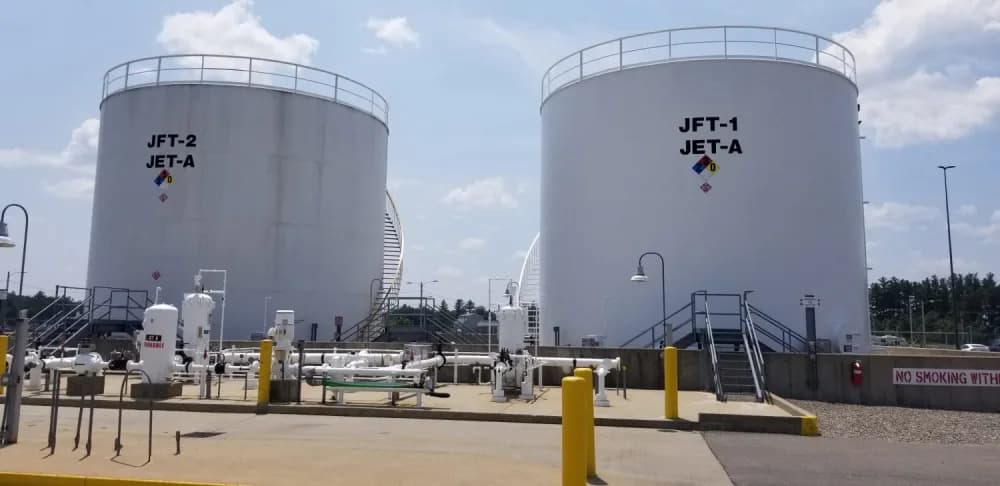
How war redrew the global aviation fuel map as Nigeria's Dangote Refinery emerged among the world's leading exporters
The Middle East conflict did more than disrupt crude oil shipments. It overturned the global aviation fuel market, wiping out some of the world's biggest jet fuel exporters almost overnight and triggering one of the sharpest supply squeezes the industry has experienced in years.
As Gulf exports collapsed, airlines scrambled for alternative supplies to keep aircraft flying, forcing buyers to look beyond traditional producers.
The supply shock pushed jet fuel prices to record highs, increased operating costs for airlines and filtered through to passengers in the form of higher ticket prices across several international routes.
Out of the disruption emerged an unlikely winner. Nigeria, through the Dangote Refinery, rapidly transformed from a net importer of aviation fuel into one of the world's most important export centres.
Within months of commencing large-scale exports, the 650,000-barrel-per-day refinery was supplying Europe, Africa and other international markets, earning recognition from global energy trackers as the world's largest single-site exporter of jet fuel in April 2026.
Industry data from Kpler, Vortexa, S&P Global, Reuters, the U.S. Energy Information Administration (EIA), Windward and Bloomberg show just how dramatically the global export landscape changed. Established suppliers including Kuwait, China and Russia saw exports collapse or disappear entirely, while the United States, South Korea and Nigeria expanded shipments to fill the vacuum left by the Middle East crisis.
Before the Crisis: The World's Largest Jet Fuel Exporters
Before the outbreak of the Middle East conflict, global seaborne jet fuel exports averaged about 1.77 million barrels per day (bpd). The market was largely dominated by Asian and Gulf refiners, which supplied airlines across Europe, Asia and Africa.
1. South Korea: 350,000–400,000 bpd (about 20–22% of global seaborne exports) Leading refinery/export hub: SK Energy Ulsan Complex, GS Caltex Yeosu, S-Oil Onsan and Hyundai Oilbank Daesan. South Korea remained the world's largest exporter of jet fuel, serving major aviation markets across Asia-Pacific and North America.
2. Kuwait: About 260,000 bpd (around 15% of global trade) Leading refinery: Al-Zour Refinery, supported by Mina Al-Ahmadi and Mina Abdullah. Kuwait was the second-largest supplier globally, with most cargoes destined for Europe and Asia.
3. Saudi Arabia: 200,000–230,000 bpd (12–13%) Leading refinery: SATORP (Jubail), alongside Yasref and Ras Tanura. Saudi Arabia remained one of the world's biggest aviation fuel suppliers before the conflict disrupted Gulf exports.
4. United States: 219,000 bpd (about 12%) Leading refiners: Valero, Marathon Petroleum, ExxonMobil and Phillips 66. Most exports supplied North and South America, with smaller volumes reaching Europe.
5. India: 150,000–180,000 bpd (9–10%) Leading refineries: Reliance Industries' Jamnagar complex and Nayara Energy's Vadinar refinery. India exported significant jet fuel volumes to Europe before sanctions and crude supply disruptions altered trade flows.
6. United Arab Emirates: 130,000–150,000 bpd (around 8%)
Leading refinery: ADNOC Ruwais Refinery. The UAE served as a major aviation fuel supplier for Europe, Africa and Asia.
7. China: 100,000–130,000 bpd (6–7%) Leading refiners: Sinopec Zhenhai, PetroChina Dalian and CNOOC Huizhou. China remained a key exporter before introducing fuel export restrictions.
8. Singapore: 80,000–100,000 bpd (about 5%) Leading refinery: ExxonMobil Jurong Island, Shell Bukom and SRC. Singapore's refining hub remained one of Asia's major trading centres.
9. Russia: Around 30,000 bpd (about 2%) Leading refineries: Gazprom Neft Omsk and Kirishi Refinery. Russian exports were already declining before later export restrictions.
10. Netherlands: 20,000–30,000 bpd (1–2%) Leading refinery: Shell Pernis Refinery. Much of its exports consisted of redistributed European cargoes.
For years, South Korea remained the undisputed leader, supported by three of Asia's largest export-oriented refineries. Kuwait followed closely, while Saudi Arabia and the UAE together accounted for almost one-third of the world's aviation fuel exports. Nigeria was virtually absent from the international rankings.
Everything changed in March 2026.
After the Crisis: The New Export Order
By April, global seaborne jet fuel exports had plunged to around 1.1 million barrels per day, the lowest seasonal level recorded in a decade.
The collapse was driven largely by the Gulf conflict. Kuwait's exports fell by about 97%, China suspended overseas shipments to safeguard domestic supply, while Russia halted exports after repeated attacks on its refining system.
Those losses created a supply vacuum that only a handful of countries were able to fill.
1. United States: Estimated 300,000–340,000 bpd (about 20–22%) Leading refiners: Valero, Marathon Petroleum, ExxonMobil and Phillips 66. US exports to Europe surged by more than 400%, making America the world's largest jet fuel exporter during the crisis.
2. South Korea: Around 260,000–300,000 bpd (18–20%) Leading refineries: SK Energy Ulsan, GS Caltex Yeosu and S-Oil Onsan. South Korea increased exports sharply, recording its highest monthly shipments in nine months.
3. Nigeria: Estimated 110,000–130,000 bpd (about 8–10%) Leading refinery: Dangote Refinery, Lekki. Nigeria emerged as one of the fastest-growing suppliers after Dangote redirected cargoes to Europe, South Africa and several African markets. S&P Global described Dangote as a supplier of last resort during the disruption, while export tracking data showed it became the world's single largest exporter of jet fuel in May 2026.
4. Saudi Arabia: Approximately 90,000–110,000 bpd (6–7%)
Leading refinery: SATORP. Exports continued mainly through the East-West Pipeline, although volumes remained well below pre-war levels.
5. United Arab Emirates: About 70,000–90,000 bpd (5–6%)
Leading refinery: ADNOC Ruwais. Pipeline routes allowed limited exports despite disruptions around the Strait of Hormuz.
6. India: Around 60,000–80,000 bpd (4–5%) Leading refineries: Jamnagar and Vadinar. Exports fell sharply as refiners prioritised domestic demand and lost access to some export markets.
7. Singapore: Approximately 55,000–70,000 bpd (4%) Leading refinery: ExxonMobil Jurong Island. Supply remained constrained by reduced regional crude availability.
8. Netherlands: About 40,000–50,000 bpd (around 3%) Leading refinery: Shell Pernis. Rotterdam increasingly served as a redistribution hub for incoming American cargoes.
9. Kuwait: Less than 10,000 bpd (below 1%) Leading refinery: Al-Zour. Military strikes crippled exports, causing a decline of roughly 97% from pre-crisis levels.
10. China: 0 -1 bpd Leading refineries: Sinopec and PetroChina facilities. Government export restrictions imposed in March effectively removed China from the international jet fuel market but few trades are ongoing particularly from within China and surrounding countries.
The biggest surprise was Nigeria.
Within months of starting exports, Dangote Refinery emerged as one of the world's most influential suppliers of aviation fuel. Kpler and S&P Global data showed the refinery exported about 158,000 barrels per day of jet fuel in April alone, making it the largest single refinery exporting aviation fuel anywhere in the world during the month.
The refinery's growing output also helped lift Nigeria's refined petroleum exports to roughly 353,000 barrels per day, more than double February's level, with Europe becoming one of its biggest destinations as buyers sought alternatives to disrupted Middle Eastern supplies.
For Europe, the timing could hardly have been better. Before the conflict, more than half of its imported jet fuel originated from the Gulf. When those supplies dried up, traders turned to the United States, South Korea and, increasingly, Nigeria.
The consequences extended far beyond the refining industry. Jet fuel accounts for one of the largest costs in airline operations, and the sharp rise in prices forced many international carriers to increase fares, introduce fuel surcharges and reassess long-haul schedules during the early months of the crisis.
Although supply has gradually improved following the reopening of key shipping routes, the upheaval has permanently altered global trade flows. Countries that once dominated the aviation fuel market no longer enjoy the same influence, while new suppliers have secured a foothold in markets previously beyond their reach.
Among them, Nigeria's Dangote Refinery stands out. What began as Africa's largest refinery has, in a remarkably short period, become one of the world's most important aviation fuel exporters an achievement few industry observers would have predicted before the crisis.