

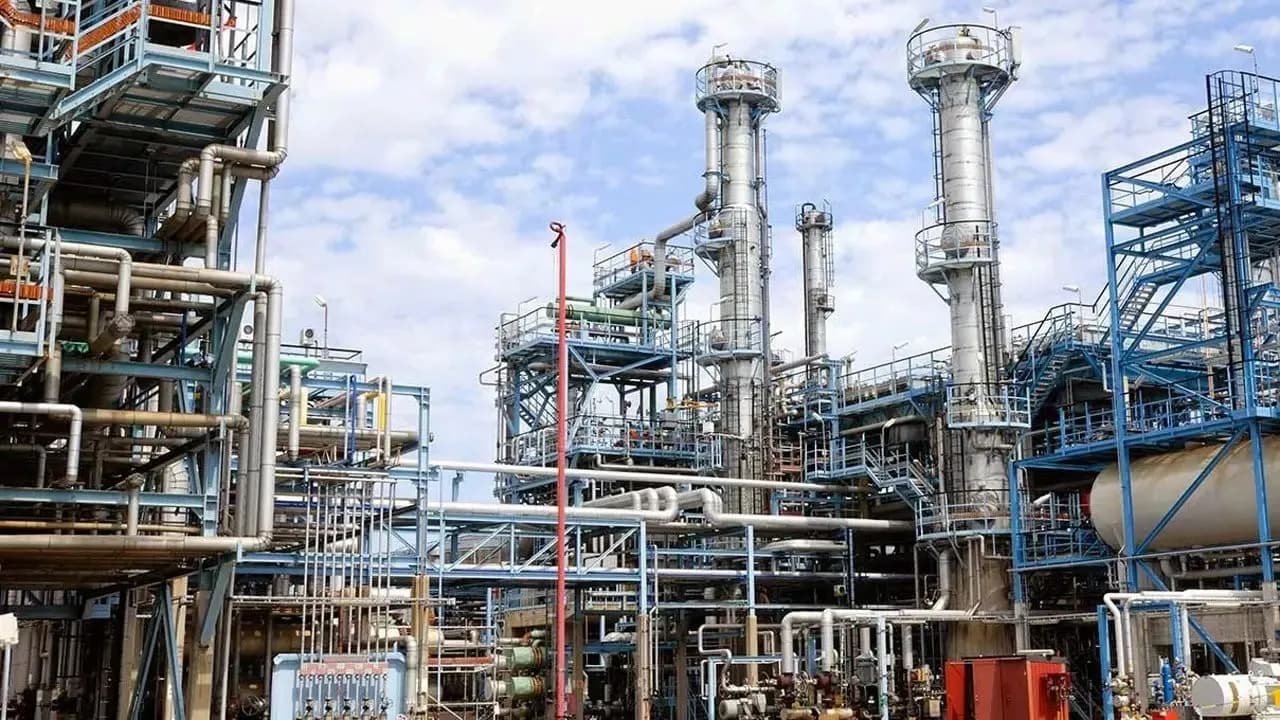
As the world shifts toward renewable energy and green technologies, it’s easy to overlook the foundational role oil refineries have played in powering economies. In Africa, several oil refineries built decades ago continue to shape energy landscapes, reflecting deep histories of resilience and industrial growth.
While many of these facilities face pressure to modernize or shut down due to age, emissions, or inefficiency, they remain critical to local fuel supply chains. These refineries have weathered wars, sanctions, and market fluctuations, standing as industrial landmarks in their respective countries.
In this feature, we highlight five of the oldest refineries in Africa still remembered for their historic and strategic importance.
1. Port Harcourt Refinery (Nigeria) – Commissioned in 1965
Nigeria’s Port Harcourt Refinery began operations in 1965. Located in Rivers State, it played a major role in establishing the country’s refining capacity. Initially designed to process 35,000 barrels per day (bpd), it later expanded in 1989 with a new complex that raised total capacity above 200,000 bpd.
For decades, the refinery met local fuel demand and reduced import dependency. Although years of neglect led to underperformance, current rehabilitation efforts aim to restore it. The plant remains key to Nigeria’s plan to revive its domestic refining sector.
2. Suez Refinery (Egypt) – Commissioned in 1965
Egypt launched the Suez Refinery in 1965 to boost its energy independence. Operated by the Suez Oil Processing Company (formerly Suez Oil Refining Company, SORC), the facility processes both local and imported crude oil. It has a nameplate capacity of 60,000 barrels per day and is one of eight refineries in Egypt, which together have a total capacity of approximately 763,000 barrels per day. The refinery occupies a strategic location on the Gulf of Suez, serving both domestic and regional markets.
The facility proved essential during periods of geopolitical tension, particularly in the 1970s. Today, it continues to contribute to Egypt’s fuel supply, even as newer and more advanced plants take center stage.
3. Assab Refinery (Eritrea, formerly Ethiopia) – Commissioned in 1967
The Assab Refinery began operations in 1967, when Eritrea was still part of Ethiopia. Built to process 18,000 bpd, it supplied fuel to Ethiopia and parts of East Africa. Despite its relatively small size, it had a major impact on regional fuel security at the time.
The plant shut down in the late 1990s following the Eritrea-Ethiopia war. Although inactive today, it holds historical significance as one of East Africa’s first refineries.
4. Dakar Refinery (Senegal) – Commissioned in 1963
Senegal’s Société Africaine de Raffinage (SAR) started the Dakar Refinery in 1963. It became one of the earliest refining facilities in West Africa. The plant has a capacity of about 27,000 bpd and continues to meet domestic fuel demand.
French technical partnerships helped launch the refinery, which remains operational after several upgrades. It supports Senegal’s energy security and is now undergoing modernization to meet new environmental and fuel standards.
5. El Brega Refinery (Libya) – Commissioned in 1961
Libya built the El Brega Refinery in 1961. Located on the eastern coast, it was one of North Africa’s first oil refining facilities. The Sirte Oil Company manages operations at the plant, which initially processed around 10,000 bpd.
Despite Libya’s larger and more advanced refineries, El Brega holds symbolic value. It marked the country’s early involvement in global energy markets. Although conflict occasionally disrupted operations, the refinery continues to function as part of Libya’s oil infrastructure.
Africa’s Refining Backbone
These five historic refineries helped build the foundation of Africa’s oil industry. Their long-standing presence reflects both industrial achievement and national resilience. While newer technologies and cleaner fuels now shape the future, these legacy plants remain symbols of Africa’s energy journey.
As countries modernize, these facilities can either be revitalized or repurposed to meet new energy goals. Their legacy, however, remains firmly etched in the continent’s industrial history.