

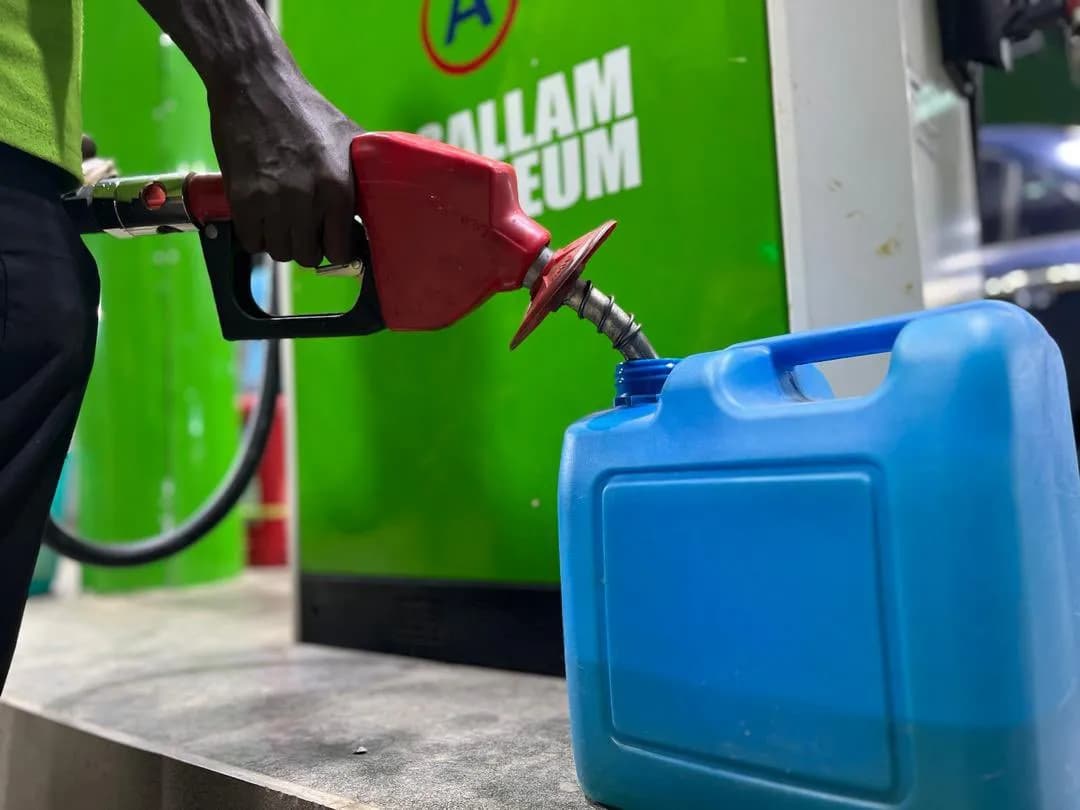
The average retail price of Household Kerosene (HHK), a vital cooking and lighting fuel for millions of Nigerian households, surged significantly in July 2025, according to fresh data from the National Bureau of Statistics (NBS). While the month-on-month increases appear marginal, year-on-year figures reveal steep hikes that have deepened household energy poverty across states and regions.
Litre Prices Show Marginal Monthly Rise but Big Annual Jump
NBS reports that the average retail price of kerosene per litre increased slightly by 0.16% month-on-month, moving from ₦2,192.63 in June 2025 to ₦2,196.19 in July 2025.
However, compared with July 2024, when the price stood at ₦1,769.86, kerosene costs climbed by 24.09% year-on-year, underscoring a sharp inflationary impact on household budgets.
Gallon Purchases Record Steeper Increases
The gallon market showed even more pronounced increases. The average retail price of kerosene per gallon stood at ₦8,695.90 in July 2025, reflecting a marginal monthly increase of 0.14% from ₦8,684.15 in June.
But on an annual basis, the cost of a gallon skyrocketed by 50.92%, compared to ₦5,762.10 in July 2024.
Regional and State Disparities Persist
Just as with other petroleum products, significant variations exist across Nigeria’s regions and states.
- Highest litre prices: Delta (₦2,598.21), Edo (₦2,574.57), Rivers (₦2,560.72).
- Lowest litre prices: Abia (₦1,679.31), Oyo (₦1,763.40), Bayelsa (₦1,797.46).
- Highest gallon prices: Edo (₦10,285.57), Kebbi (₦9,733.55), Delta (₦9,691.96).
- Lowest gallon prices: Abia (₦6,746.89), Bayelsa (₦7,088.56), Oyo (₦7,135.29).
At the zonal level, the South-South region posted the highest litre price at ₦2,339.26, while the South-West recorded the lowest at ₦2,069.59. For gallon purchases, the South-South again led with ₦9,067.65, while the South-West trailed with ₦8,301.49.
Market Context and Energy Poverty Concerns
The sharp rise in kerosene prices underscores the deepening household energy affordability crisis. Kerosene remains a critical fuel for low- and middle-income families, especially in rural and peri-urban areas where alternatives such as Liquefied Petroleum Gas (LPG) are often unaffordable.
Industry analysts attribute the sustained surge to supply constraints, high distribution costs, limited refining output, and FX challenges. Although the Dangote Refinery has commenced operations, kerosene distribution remains unstable, with a focus still on petrol, diesel, and aviation fuel.
Without targeted government intervention such as boosting local refining output, addressing logistics inefficiencies, and supporting vulnerable households the affordability gap may widen further, pushing families towards unsafe alternatives like firewood and charcoal.
What This Means for Consumers
For millions of Nigerians, the NBS data highlights the escalating cost of daily living. The steep year-on-year rise in both litre and gallon purchases reflects a fragile downstream market that directly affects consumer welfare.
Energy experts stress that stabilising kerosene prices is essential to prevent a deeper energy poverty crisis, which already threatens both household livelihoods and public health in Nigeria.