

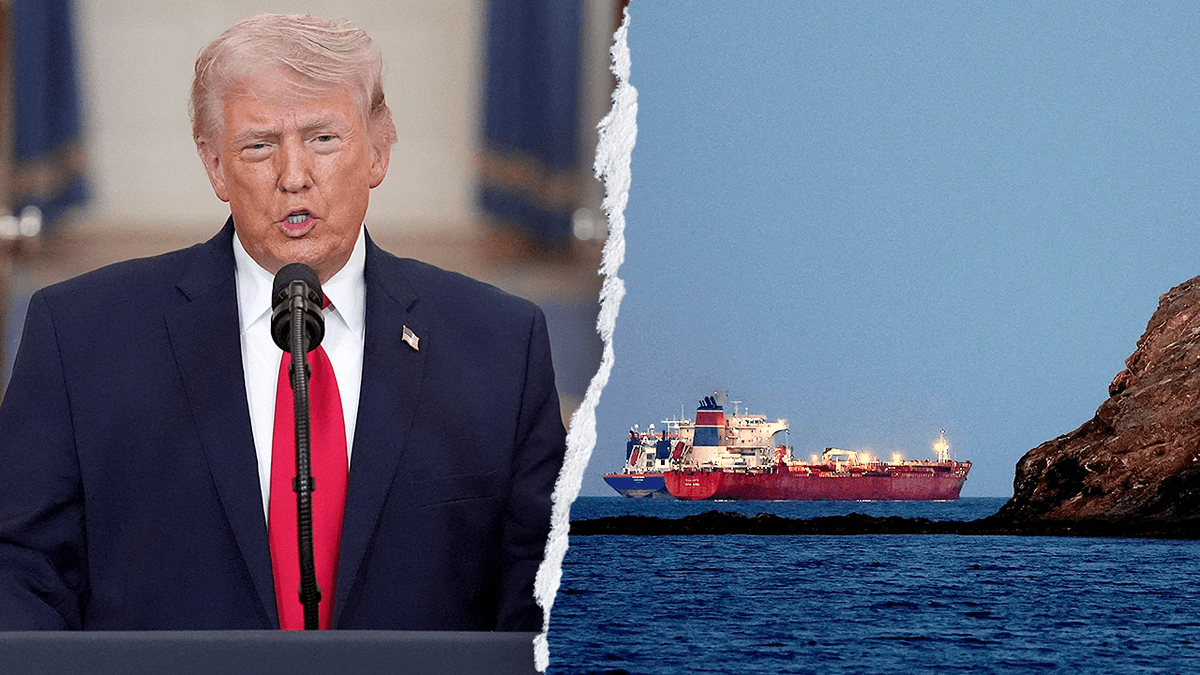
US President Donald Trump’s handling of the Iran conflict has emerged as a fresh risk factor for global oil markets as attacks on tankers in the Strait of Hormuz intensify and concerns grow over a wider escalation in the region.
Reports on Thursday indicated that the Trump administration was considering further military action against Iran, raising concerns that renewed US strikes could escalate the conflict and put additional pressure on the security of the strategic oil shipping corridor.
The development comes after tanker attacks around the Strait of Hormuz reached their highest weekly level since the Iran war began. At least 12 attacks involving oil, liquefied natural gas and liquefied petroleum gas tankers were recorded between September 28 and October 5, according to maritime security sources.
The attacks have already affected vessel movements through the waterway. Kpler data showed that only seven commodity vessels transited the Strait on Tuesday, the lowest level since July 23, while crude oil movements fell to about 10.1 million barrels per day, roughly 74% of pre-war levels.
The decline in traffic is significant for the oil market because Hormuz is a critical route for Gulf crude exports. Although producers have increased shipments through alternative routes and other export points, the continuing attacks are making the recovery in oil flows increasingly fragile.
The prospect of further US military action therefore adds another layer of uncertainty to an already disrupted market. Any escalation that further restricts tanker movements could increase freight and insurance costs and put additional upward pressure on crude prices.
However, Trump said on Thursday that the United States would not attack Iran before the November 3 midterm elections, while stating that Washington was engaged in talks with Tehran. He also maintained that the US blockade of Iranian ports remains in place.
The mixed signals from Washington come as oil prices remain elevated above $100 per barrel, reflecting continued concern over Middle East supply disruptions.
For Nigeria, sustained disruption around Hormuz could keep international crude prices elevated, supporting the value of crude exports but also increasing freight, landing cost, insurance and refined-product replacement costs. The longer the security crisis persists, the greater the potential for its effects to filter through both Nigeria’s upstream earnings and downstream market.