

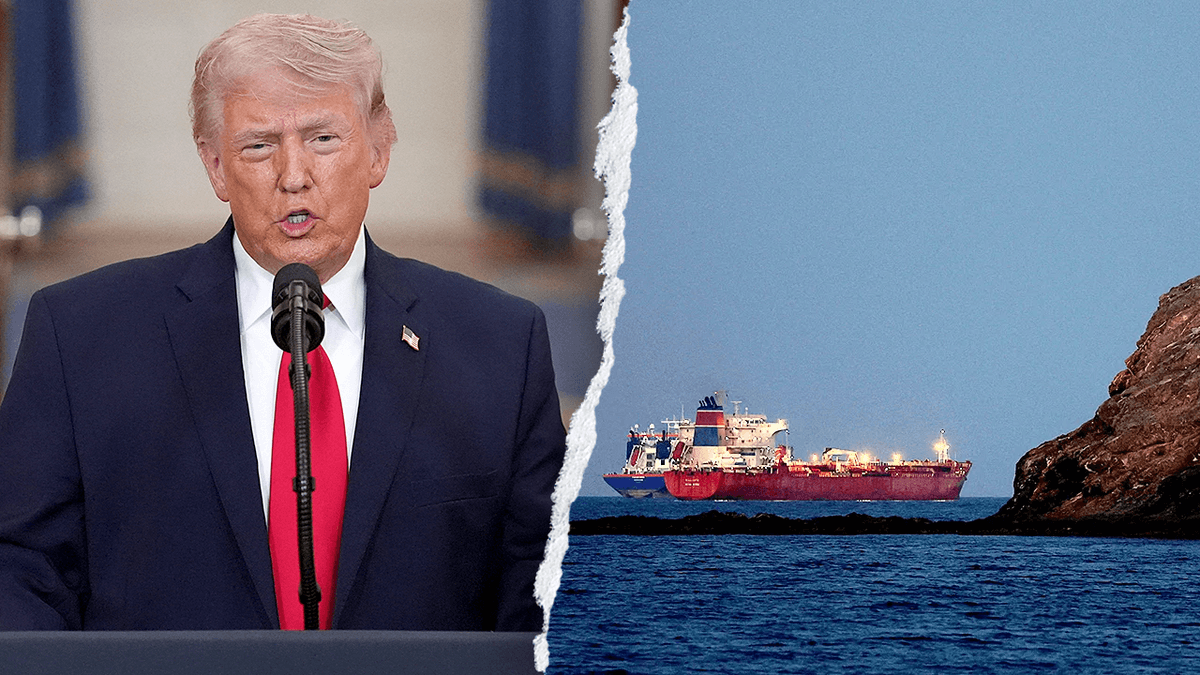
US President Donald Trump is weighing a major military escalation against Iran after fresh attacks on vessels in the Strait of Hormuz, raising renewed concerns over the security of one of the world’s most important oil and gas shipping routes.
Trump said he was facing a “big decision” on whether to launch a major assault aimed at what he described as the “annihilation” of the Iranian regime, as tensions intensified around the strategic waterway through which a significant share of global petroleum trade normally passes.
The comments came after the United Kingdom Maritime Trade Operations reported that a tanker was struck by an unknown projectile in the Strait of Hormuz early Friday, causing a fire that was later extinguished. The crew was reported safe, while the environmental impact remained unconfirmed.
Iran’s Islamic Revolutionary Guard Corps separately said it had struck and detained a Togo-flagged oil tanker, identified as Trend, after a fire broke out while the vessel was attempting what Iran described as an “illegal passage” through the strait. It was not immediately clear whether the Iranian claim and the UK maritime report concerned the same vessel.
The developments put renewed focus on the risk to crude oil, petroleum products and other energy cargoes moving through Hormuz. Reuters reported that only four commodity vessels transited the strait on Thursday, compared with a 10-day average of 16, according to preliminary Kpler data, while some vessels have switched off their transponders amid the security concerns.
For the oil market, the significance extends beyond the vessels directly attacked. Any sustained reduction in traffic through Hormuz can affect the movement of crude and refined products from the Gulf, increasing shipping, insurance and freight risks and potentially tightening supply availability in markets dependent on the region.
Trump’s latest comments therefore come at a critical point in the conflict, with the US president indicating that Washington’s next military decision could involve a substantial expansion of operations against Tehran.
“It’s a big decision,” Trump told Axios ahead of a planned meeting with Persian Gulf leaders next week. “Anything could happen with me.”
The escalation also comes against the backdrop of continuing US efforts to maintain control over maritime traffic in the region. The White House said in August that US forces had facilitated the movement of nearly 1,500 commercial vessels carrying about 750 million barrels of crude under American protection, although independent reporting continues to document significantly reduced shipping activity through Hormuz.
With another tanker incident now reported and Trump openly considering his next military move, developments around Hormuz remain a key variable for international energy markets, particularly for crude supply flows, tanker availability and the cost of transporting petroleum cargoes.