

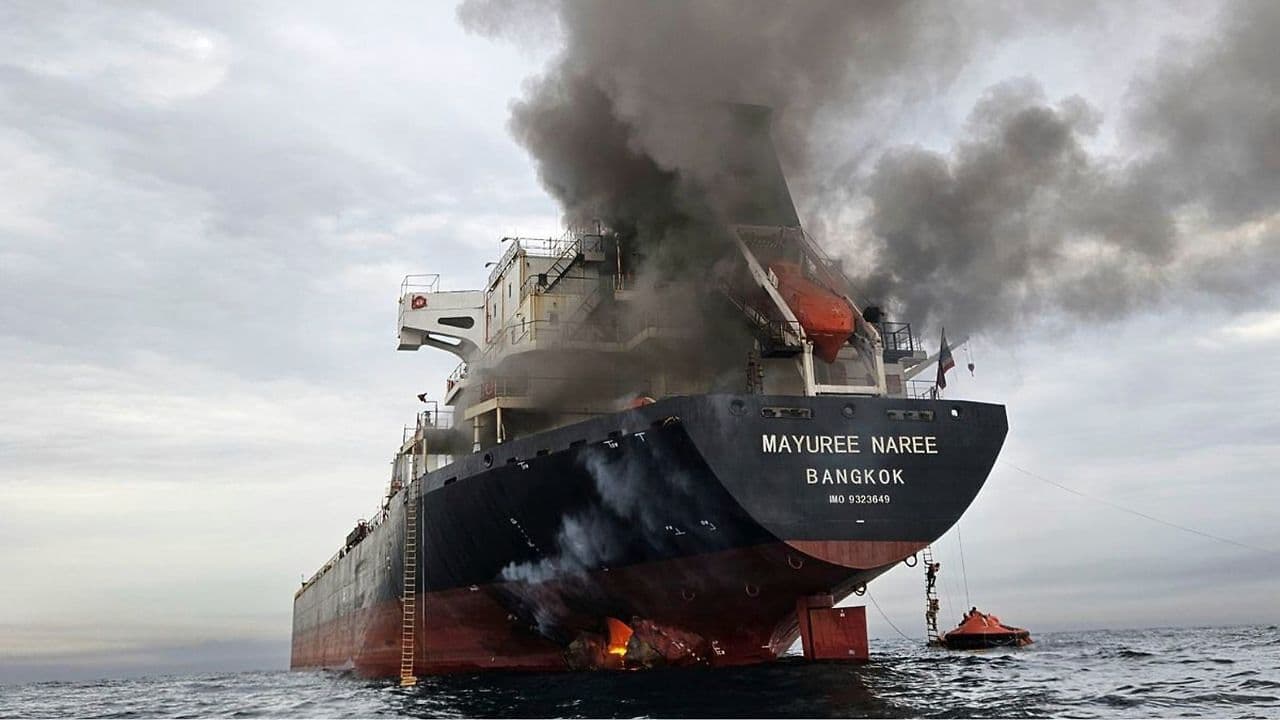
Two oil tankers have reportedly been targeted by unidentified projectiles near the Strait of Hormuz, raising fresh concerns over vessel security and maritime traffic through one of the world’s most important oil and LNG transit corridors.
According to a report by the UK Maritime Trade Operations (UKMTO), the first tanker was attacked while leaving the Strait of Hormuz. The incident triggered a small fire and a loss of power onboard, but the fire was brought under control and the vessel continued its voyage. No casualties or environmental damage were reported.
Several hours later, a second crude oil tanker reported being struck by unidentified projectiles east of Oman. The crew remained safe, with no injuries or environmental damage reported. UKMTO has not identified the projectiles or those responsible for either incident, and authorities are investigating.
The incidents add to the security risks facing vessels operating around the Strait of Hormuz and nearby waters. The waterway remains a critical maritime chokepoint for global energy supplies, with the source noting that about one-fifth of global oil and LNG supplies passed through the strait before the conflict involving Iran intensified.
The latest attacks come amid continuing disruption to commercial shipping in the region. The source reports that Tehran has been blocking commercial vessels and firing on ships it accuses of making unauthorised crossings, while the United States has responded with a counterblockade of Iranian ports aimed at restricting Iran’s oil exports.
For oil and gas markets, renewed incidents involving tankers could add further pressure to an already sensitive shipping environment. Any sustained disruption around the Strait of Hormuz has implications not only for crude oil movements but also for LNG and refined petroleum product supply chains.
UKMTO has advised vessels transiting the area to proceed with caution and report suspicious activity. With the origin of the projectiles and those responsible still unconfirmed, the immediate security implications remain under investigation, while vessel operators continue to face heightened risks around the key shipping corridor.