

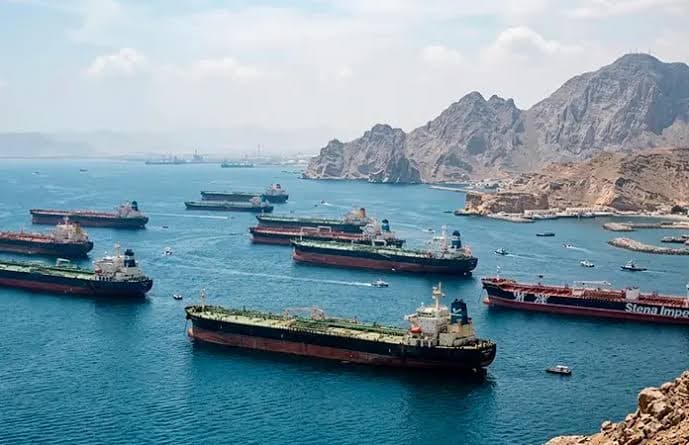
At least 50 tankers carrying Iranian crude oil and other petroleum products are currently operating near Iran’s coastline, with the vessels affected by continued U.S. restrictions on the country’s maritime oil exports, according to shipping data from United Against Nuclear Iran (UANI).
UANI, a U.S.-based non-profit and non-partisan policy organisation, identified the vessels in its latest shipping update, noting that they are carrying mainly crude oil, as well as other petroleum products and liquefied petroleum gas (LPG).
The largest concentration is around Kharg Island, Iran’s major oil export terminal in the Gulf. UANI identified as many as 16 laden tankers in the area, including 11 anchored east of the island and another five located farther south.
The vessels remain in the region as the U.S. continues its maritime restrictions on Iranian oil exports.
The U.S. Navy reinstated the maritime blockade on July 14, following the collapse of efforts to reach an agreement with Iran. The blockade was reintroduced in the Gulf of Oman, outside the Strait of Hormuz, as Washington sought to reduce Iranian oil exports to zero and increase its leverage in negotiations.
Since the blockade was reinstated, UANI has tracked at least 39 Iranian oil and petrochemical loadings, including eight from Kharg Island.
The organisation said the loadings have not enabled Iranian shipments to overcome the broader restrictions imposed on the country’s maritime oil trade.
The effects have also extended to Iranian-flagged vessels operating outside the Gulf. UANI said some tankers that became empty after conducting ship-to-ship (STS) transfers are now remaining at anchorages across the Indo-Pacific instead of returning to Iranian ports because of the continuing U.S. restrictions.
Iran has continued to reject the effectiveness of the U.S. blockade and maintains that it has found ways to circumvent the restrictions.
However, tanker-tracking data indicates a significant decline in Iranian crude shipments.
Preliminary estimates compiled by Bloomberg showed that Iranian crude loadings fell to about 250,000 barrels per day in August, while no crude was loaded onto tankers in September.
The September figure marked the first month since the war began in which tanker-tracking data recorded no Iranian crude loadings.
The latest vessel movements indicate that the U.S. restrictions are affecting Iran’s ability to move crude and petroleum products by sea, with dozens of laden tankers remaining around the Iranian coastline and some Iranian-flagged vessels staying outside the country after completing STS operations.