

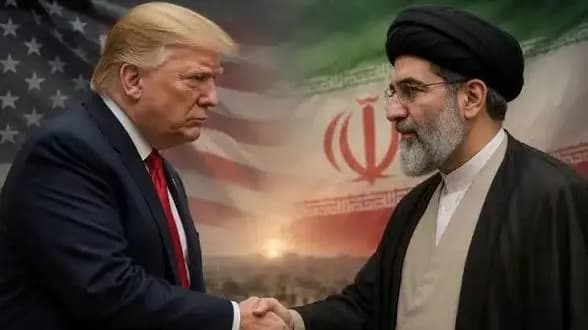
The United States and Iran have reached a framework agreement aimed at ending months of hostilities and restoring normal shipping through the Strait of Hormuz, with both sides expected to formally sign the deal in Geneva on June 19, a development that has already triggered a sharp decline in global oil prices.
The agreement, confirmed by senior U.S. officials and Iranian authorities, establishes a 60-day negotiation period to address key issues including Iran’s nuclear programme, sanctions relief, regional security, and the future operation of one of the world's most important energy transit routes.
The diplomatic breakthrough comes as oil markets increasingly price in the prospect of improved crude supplies and reduced geopolitical risk in the Middle East.
As of 4:30 p.m. WAT on Tuesday, Brent crude traded at $79.65 per barrel, down 4.23 per cent, while U.S. West Texas Intermediate (WTI) crude fell 4.93 per cent to $76.77 per barrel. The latest decline extends the sharp correction that began after reports emerged that Washington and Tehran were nearing an agreement to ease tensions and reopen the Strait of Hormuz.
According to U.S. administration officials, President Donald Trump and Vice President JD Vance signed the framework agreement electronically, while Iranian Parliament Speaker and chief negotiator, Mohammad Baqer Qalibaf, signed on behalf of Tehran.
Officials said the memorandum would be formally signed during a ceremony scheduled for June 19 in Geneva, with the full text expected to be released publicly within days.
Both governments confirmed that an understanding had been reached, although negotiations on a permanent settlement will continue during a 60-day period outlined in the framework.
Iranian state media reported that the agreement contains provisions for discussions on nuclear matters and sanctions, while U.S. officials maintained that preventing Iran from acquiring nuclear weapons remains a central objective of the arrangement.
Another major component of the framework is the reopening of the Strait of Hormuz, a critical shipping corridor through which roughly one-fifth of global oil and liquefied natural gas supplies typically pass.
The waterway was effectively disrupted following the escalation of conflict earlier this year, contributing to volatility in global energy markets and raising concerns over supply security.
U.S. officials said maritime traffic through the strait is expected to increase significantly over the coming weeks. Current vessel movements are estimated at about 25 ships per day, compared with roughly 140 daily crossings before the conflict.
According to Washington, traffic could rise to between 40 and 50 ships by the end of this week, with the route expected to be fully operational by June 19.
The framework provides for toll-free passage through the strait during the initial 60-day implementation period. However, questions remain over the long-term structure of shipping fees.
Iranian Foreign Ministry spokesman, Esmail Baqaei, said Tehran and Oman would coordinate navigation, environmental protection, insurance, and related maritime services. While he stated that Iran does not intend to impose transit tolls, he indicated that fees could be charged for services provided within the shipping corridor.
The agreement has also generated debate over sanctions relief.
Reports citing Iranian officials suggested the deal could involve the release of up to $25 billion in frozen Iranian assets. U.S. officials, however, denied that any funds had been released, insisting that any sanctions relief would be phased and tied to verifiable commitments by Tehran.
Washington further stated that sanctions adjustments would depend on progress in nuclear negotiations and broader regional conduct.
Officials also clarified that the framework does not restrict Israel's ability to respond to attacks from Iranian-backed groups and is not contingent on Israeli military withdrawals from Lebanon.
Meanwhile, Pakistani Prime Minister Shehbaz Sharif, whose government has been involved in mediation efforts, described the arrangement as paving the way for an immediate end to military operations across multiple fronts.
Beyond its political significance, the agreement has had an immediate impact on commodity markets.
The sharp decline in Brent and WTI prices reflects growing confidence among traders that oil exports and tanker movements through the Strait of Hormuz could gradually return to normal levels, reducing fears of prolonged supply disruptions that had previously pushed prices higher.
Market participants are now closely monitoring developments ahead of the planned June 19 signing, which could mark one of the most significant geopolitical de-escalation efforts in the region in recent years and reshape expectations for global energy markets in the second half of 2026.