

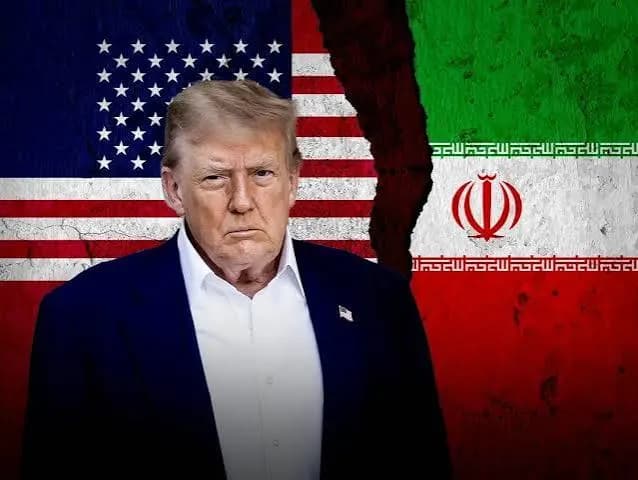
The United States and Iran exchanged fresh military strikes over the weekend, with both governments accusing each other of violating the ceasefire agreement reached earlier this month, raising new concerns over the future of the fragile peace framework and security in the Strait of Hormuz.
The latest escalation began after the United States blamed Iran for a drone attack on the Panama-flagged tanker MT Kiku in the Strait of Hormuz, prompting retaliatory American airstrikes on Iranian military positions. Tehran responded with missile and drone attacks targeting U.S. military facilities in Kuwait and Bahrain, while insisting Washington, not Iran, had breached the ceasefire, according to Reuters and official statements from both governments.
U.S. Central Command (CENTCOM) said Iran had been given an opportunity to comply with the ceasefire, but instead launched a one-way attack drone that struck the commercial tanker.
In response, CENTCOM said U.S. fighter aircraft struck ten Iranian military targets in and around the Strait of Hormuz, including air defence systems, communications facilities, military equipment, coastal radar installations, and drone storage sites.
Shortly after the operation, U.S. President Donald Trump warned that Washington's patience with Tehran was wearing thin.
In a post on Truth Social, Trump said the strikes targeted Iranian missile and drone storage locations and coastal radar facilities because Iran had violated the ceasefire "again."
"There may come a point when we are no longer able to be reasonable and will be forced to militarily complete the job that we very successfully started," Trump wrote.
"If that happens, the Islamic Republic of Iran will no longer exist."
Iran rejected the U.S. account, accusing Washington of using what it described as the interception of an "offending ship" as a pretext for attacking five Iranian coastal positions.
In a statement carried by Iranian state media, the Islamic Revolutionary Guard Corps (IRGC) announced retaliatory ballistic missile and drone strikes against what it described as eight strategic U.S. military installations, including Ali Al-Salem Air Base in Kuwait and the U.S. Fifth Fleet headquarters in Port Salman, Bahrain.
The IRGC claimed the facilities had been destroyed.
However, a U.S. official told Reuters there were no reported American casualties or significant damage to U.S. military installations across the Middle East.
Iran also warned that any future military action against its territory would attract what it described as a "crushing response," regardless of the scale of the attack.
The IRGC further insisted that, under the Memorandum of Understanding signed earlier this month, Iran retains responsibility for managing passage and navigation through the Strait of Hormuz, adding that vessels found violating the new arrangements would face stronger enforcement measures.
Iran's Foreign Ministry separately condemned the U.S. strikes, describing them as "brutal attacks" and accusing Washington of undermining the ceasefire agreement.
According to Tehran, the latest military action demonstrates that the United States "does not place the slightest value and credibility on its commitments," warning that the attacks could bring the peace process to a complete halt.
Following Iran's retaliatory launches, both Kuwait and Bahrain activated their air defence systems.
The Kuwaiti Armed Forces confirmed that air defence units intercepted what they described as hostile missiles and drones, while Bahrain's Interior Ministry urged residents to remain calm and move to the nearest safe location as a precaution.
Despite the renewed hostilities, CENTCOM said commercial vessels continue to transit the Strait of Hormuz.
The latest confrontation follows another exchange less than a day earlier.
The United States had previously launched retaliatory strikes after blaming Iran for a drone attack on the Singapore-flagged cargo vessel MV Ever Lovely on June 25.
CENTCOM described that operation as "a powerful response" to what it called unwarranted Iranian aggression against commercial shipping.
Tehran, however, argued that the vessel was travelling through the Gulf using an unauthorised route and maintained that the subsequent American strikes themselves constituted a breach of the ceasefire agreement.
The United States and Iran signed a 14-point Memorandum of Understanding on June 17 aimed at ending months of hostilities.
Among its provisions, Iran committed to making its best efforts to guarantee toll-free and uninterrupted passage for commercial vessels through the Strait of Hormuz for an initial 60-day period.
In recent days, senior U.S. officials had expressed optimism that negotiations were progressing.
Earlier in the week, Trump said Iran had assured Washington there would be "no tolls, no insurance costs and no other charges" for ships transiting the strategic waterway, warning that negotiations would end immediately if that assurance proved false.
Diplomatic efforts have nevertheless continued.
Iranian and Omani officials recently met in Muscat to discuss future navigation arrangements in the Strait of Hormuz, with Oman reaffirming support for toll-free maritime passage.
Iran's chief negotiator, Mohammed Bagher Ghalibaf, however, indicated that management of the strategic waterway would not return to its pre-war structure, suggesting Tehran intends to retain a greater role in regulating future navigation.
The latest military exchanges have injected fresh uncertainty into efforts to preserve the ceasefire, with both Washington and Tehran now accusing each other of undermining an agreement that was intended to restore stability to one of the world's most strategically important energy corridors.