

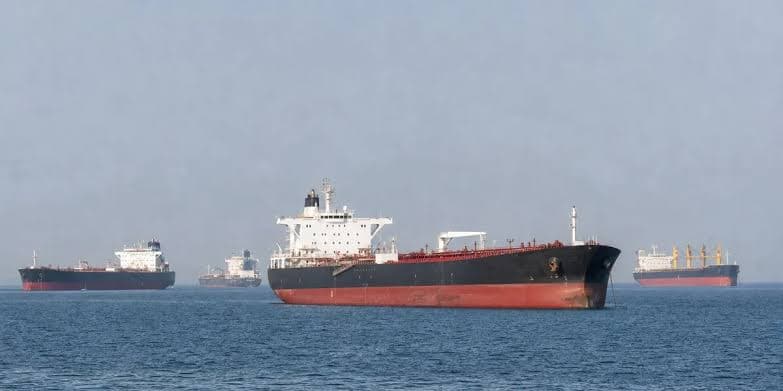
U.S. military forces have supported the movement of more than 1.5 billion barrels of oil through the Strait of Hormuz since the outbreak of the Iran war, as Washington seeks to maintain commercial shipping through the strategic energy corridor despite continuing regional security threats.
The U.S. Central Command (CENTCOM) said more than 3,000 commercial vessels had transited the waterway with support from its forces over the past six months. The figures were disclosed by CENTCOM commander Admiral Brad Cooper during a visit to the Strait of Hormuz on Sunday.
Cooper reaffirmed the U.S. commitment to working with Gulf countries and the shipping industry to maintain navigation through the passage, which is critical to global oil supplies.
“We continue to stand shoulder to shoulder with our Gulf partners and the shipping industry,” Cooper said, adding that his visit demonstrated Washington’s commitment to ensuring continued freedom of navigation through the strait.
According to CENTCOM, U.S. forces have also cleared international shipping lanes of sea mines laid by Iran’s Islamic Revolutionary Guard Corps (IRGC). The military said a 95 percent success rate for vessels navigating the strait without incident in recent months demonstrated that the United States and its regional partners controlled the international waterway.
Despite the reported progress in securing shipping routes, risks to oil transportation across the Middle East remain elevated. Rising tensions between Saudi Arabia and Yemen’s Houthi movement threaten to disrupt the recovery in regional exports, while Iran has claimed responsibility for dozens of attacks on tankers in the Persian Gulf and Strait of Hormuz.
Tanker-tracking data indicate that oil shipments through the strait and across the wider Middle East have recovered over the past two months. Some estimates suggest Hormuz oil flows have exceeded pre-war levels, although those comparisons exclude Iranian exports.
The recovery in physical shipments has yet to eliminate concerns over the reliability and cost of transporting crude oil. Markets continue to factor in the possibility of prolonged disruptions, inefficient shipping routes and further security incidents, which have pushed tanker costs to record levels.
Higher freight charges increase the cost of delivering crude oil to refineries, potentially adding to expenses for fuel producers and, ultimately, consumers.
Oil prices remained elevated despite a decline in Asian trading on Monday. Brent crude traded above $115 per barrel, while U.S. West Texas Intermediate (WTI) remained above $100, amid continuing hostilities involving the Houthis and Saudi Arabia and reported Iranian attacks on tankers in the Persian Gulf.
The developments highlight the uncertainty facing global energy markets. Although U.S. military support has helped commercial vessels move oil through Hormuz, continued regional hostilities mean the recovery in shipments remains vulnerable to renewed disruption.