

The United States has rejected Iran's declaration that it has closed the Strait of Hormuz, insisting that commercial vessels continue to transit the strategic waterway despite renewed military exchanges that have intensified tensions across the Gulf.
The dispute over the world's most important oil shipping corridor deepened on Sunday after Iran's Revolutionary Guard announced the strait would remain closed "until further notice" and until what it described as the end of U.S. interference in the region. Washington, however, maintained that freedom of navigation remained intact.
In a statement, the U.S. Central Command (CENTCOM) said its forces were deployed to protect lawful maritime traffic through the international waterway.
"Iran does not control the strait. Traffic is flowing," CENTCOM said, adding that American forces were prepared to ensure commercial vessels could continue navigating the route.
The conflicting claims came after a Cyprus flagged container vessel was attacked while transiting the Strait of Hormuz. According to British maritime authorities, the crew abandoned the burning vessel and escaped in a lifeboat about 17 kilometres east of Oman. India later confirmed that one of its nationals aboard the ship was missing, while Omani authorities said they rescued 23 crew members.
Iran maintained that its forces only fired warning shots after the vessel allegedly ignored instructions to use an approved navigation corridor and violated maritime regulations. The U.S. military disputed that account, accusing Tehran of carrying out a deliberate attack on a commercial ship.
The incident triggered another round of military escalation between both countries. The United States responded with extensive strikes across Iran, with the U.S. military saying it targeted about 140 military sites in its third wave of operations this week. Iranian media reported explosions in Bandar Abbas, Sirik, Jask, Qeshm Island and Khuzestan Province, with at least one soldier reported killed in Jask.
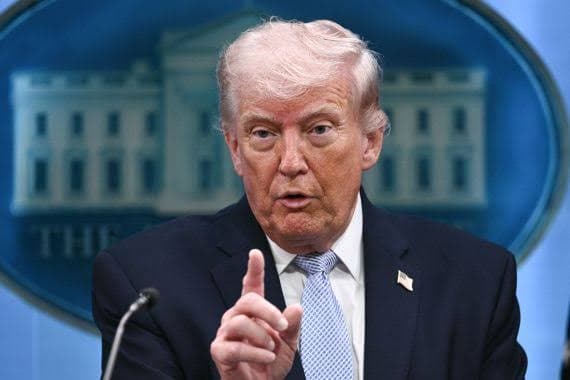
President Donald Trump said the strikes were a direct response to Iran's actions, stating that Tehran had been close to reaching an agreement before attacking the commercial vessel.
"They were giving up everything, and then all of a sudden, two hours after that they hit a ship with a drone," Trump said, adding that U.S. forces had struck Iran "very hard."
Iran retaliated within hours by launching missiles and drones toward several countries hosting U.S. military assets. Explosions and air raid sirens were reported in Qatar, Bahrain and the United Arab Emirates, while Kuwait said it was working to intercept incoming threats. Jordan also confirmed that three Iranian missiles landed within its territory.
Qatar reported that three people, including civilians, were injured by falling debris from the attacks, while the UAE said missile threats were detected but did not enter its airspace.
Iran's Revolutionary Guard also claimed responsibility for attacks targeting facilities in Oman, saying it struck logistical centres supporting U.S. naval operations and refuelling infrastructure for aircraft carriers at the Port of Duqm.
The strikes prompted a rare diplomatic protest from Muscat, which summoned Iran's ambassador only hours after hosting Iranian Foreign Minister Abbas Araqchi for discussions on maritime security and the future of the Strait of Hormuz.
Control of the strategic waterway has increasingly become one of Tehran's strongest bargaining tools during the conflict. An adviser to Iran's Supreme Leader described the strait as being more valuable than "dozens of atomic bombs," underscoring its strategic significance.
The latest confrontation follows earlier attacks on commercial vessels in the strait that also sparked military exchanges between Washington and Tehran. The renewed violence has cast further doubt over diplomatic efforts to preserve last month's ceasefire agreement, although both countries continue to signal a willingness to negotiate.
Pakistan, which has been mediating talks between the two sides, renewed calls for restraint on Sunday. Following a telephone conversation with his Iranian counterpart, Pakistani Foreign Minister Ishaq Dar said dialogue remained the only viable path toward reducing tensions and achieving lasting peace in the region.
The Strait of Hormuz remains one of the world's most critical energy corridors, handling roughly one-fifth of global oil and liquefied natural gas shipments. Any disruption to shipping through the narrow passage continues to carry significant implications for international energy markets and global supply chains.