

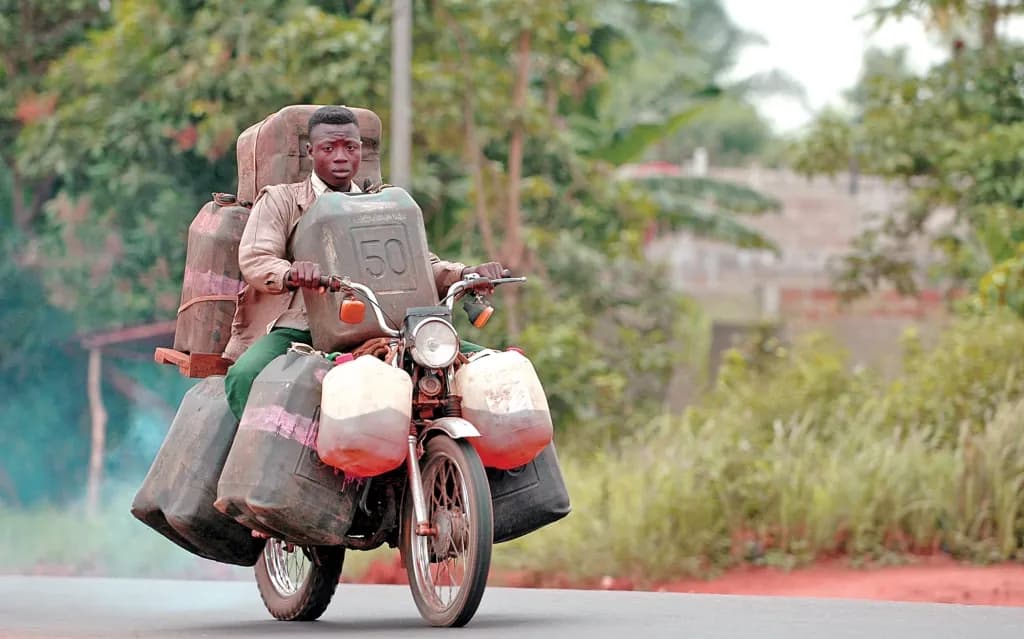
Living near Nigeria’s borders has become a daily challenge for many, as petrol prices in these regions are reaching record highs. Despite efforts by the government to stop the smuggling of cheap Nigerian fuel into neighbouring countries, the underground fuel trade is alive and well. Prices are soaring, with some legal petrol stations charging as much as N1,300 per litre, while black-market sellers are offering it for up to N1,800. For those living and working near the borders, this means hard choices, long trips for affordable fuel, and a constant struggle to keep life moving.
Why the Government Banned Petrol Sales Near the Border:
Back in 2020, then-President Buhari banned petrol stations within 50 kilometres of Nigeria’s borders from selling fuel. The goal was to curb smuggling, as people were buying cheaper, government-subsidised petrol in Nigeria and selling it for a profit in neighbouring countries where prices were higher. By restricting petrol sales near the border, the government hoped to cut off the supply that smugglers relied on, which would, in theory, discourage the practice.
However, the policy didn’t entirely go as planned. Many border-area petrol stations were shut down, and after an outcry only a few stations with special licences allowed to sell fuel within the restricted zone. Reports soon surfaced that customs officials selected these stations based on personal connections, rather than on community needs. Now, these few licensed stations operate without competition, setting prices as high as N1,300 per litre significantly above national rates. While government’s intent was to control smuggling, the effect has left local communities facing higher prices and fewer options.
The Price Locals Are Paying:
For border residents, these fuel prices are a heavy burden. Petrol isn’t just for vehicles; it powers essential tools for farming, small businesses, and daily life. At official stations, petrol costs N1,300 per litre, and on the black market, it can go up to N1,800. For many families and business owners, this pricing makes it hard to afford the fuel they need.
Some residents are left with little choice but to travel more than 50 kilometres inland to buy petrol at regular prices, typically around N1,018 per litre. But even that option has its own set of challenges. Travelling that distance can be costly and time-consuming, and returning to the border with petrol often means dealing with customs officials. According to residents, some customs officers charge unofficial “fees” to allow fuel to pass through, adding further to the cost for those already struggling.
The Black Market Solution (and Problem):
These high prices and limited options have driven the growth of a black market for petrol. Many people now buy fuel inland at regular prices, bring it back to border areas, and resell it with a markup sometimes as high as N1,800 per litre. This has created an underground fuel market that many locals rely on, even though it often means paying far above the standard rates.
The black market may provide easier access to fuel, but it comes at a cost. Families and small businesses that depend on this option find themselves spending much more just to keep going. Meanwhile, the high profits from this trade keep smugglers in business, making the smuggling economy even more difficult to control.
Is There a Better Way?
For many border residents, the current situation feels unsustainable. The government’s ban was meant to stop smuggling and protect the economy, but it’s also left border communities paying extreme prices for essential fuel. A more balanced approach could help alleviate these struggles. Expanding the number of licensed stations, enforcing fair pricing, and improving transparency in how licences are issued could help create a fairer system for locals.
Additionally, reducing some of the customs practices that add extra costs could make a difference. If there were more legitimate, affordable options closer to home, fewer people would feel forced to rely on the black market, and the underground smuggling economy could be reduced.
Until changes are made, border residents will continue to pay the price literally and figuratively for access to fuel. Many are hoping for a reevaluation of these policies to bring fuel prices down to a fair level, allowing them to keep their lives moving forward without the need for costly workarounds. In the meantime, they face a daily balancing act, managing the high costs of both legal and underground fuel sources just to meet their everyday needs.