

Oil prices have remained relatively subdued despite the prolonged disruption around the Strait of Hormuz, with weaker global demand, rising inventories, and alternative supply routes cushioning the impact of the crisis.
Brent crude was trading around $88.52 a barrel on Friday, down 1.7 percent since the start of August, while West Texas Intermediate (WTI) stood at $82.40 a barrel after falling 2.7 percent over the same period.
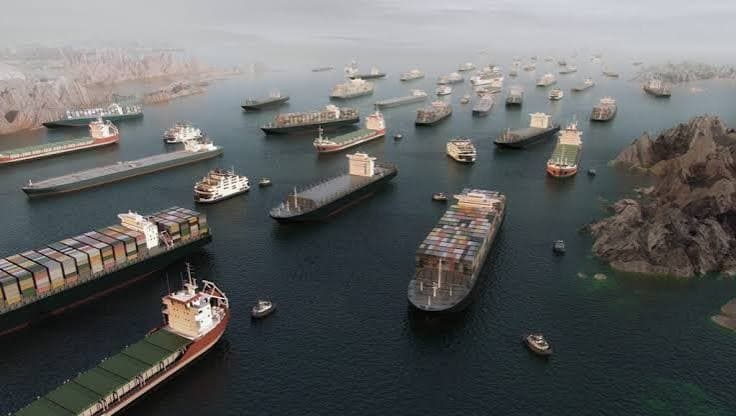
The relatively limited price response has surprised some market observers because the Strait of Hormuz remains severely disrupted, tanker traffic has fallen sharply, and the United States has indicated that its naval blockade of Iran could continue indefinitely.
The key factor, however, is not that the geopolitical crisis has eased. Rather, the oil market is adjusting to weaker consumption and finding ways to compensate for disrupted supplies.
The International Energy Agency (IEA) has significantly lowered its outlook for global oil demand this year. It now expects demand to decline by 1.6 million barrels per day in 2026, 510,000 bpd below its previous forecast, as elevated fuel prices and logistical disruptions weigh on consumption.
That weakening demand is helping to offset some of the supply risks associated with the Hormuz crisis. Analysts have also pointed to subdued Chinese demand as another factor limiting upward pressure on crude prices.
The market is also benefiting from its ability to adapt to prolonged disruptions. Analysts at Eurasia Group said even if traffic through the Strait of Hormuz remains at only 30 to 50 per cent of pre-war levels, oil flows could still be sufficient to meet global demand.
The group expects that scenario could push crude futures into a range of $65 to $80 per barrel if tensions ease and partial traffic resumes.
The supply picture has also been supported by inventory availability. U.S. commercial crude stockpiles rose by 17.4 million barrels in the week ended August 7 to 424.4 million barrels, according to the U.S. Energy Information Administration.
The increase was far above normal weekly movements and represented one of the largest inventory builds on record. Analysts attributed the jump partly to a sharp reduction in U.S. crude exports and increased imports, including higher shipments from Venezuela.
The inventory build has provided traders with another reason to discount immediate supply-shortage fears despite the continuing Middle East crisis.
The conflict itself also shows little evidence of a quick resolution. The United States has threatened to maintain its naval blockade of Iran indefinitely, while Washington and Tehran have yet to reach an agreement to halt the military confrontation.
The U.S. has also indicated that further economic measures against Iran are coming, adding to the uncertainty surrounding the conflict and the future of the Strait.
Iran, meanwhile, has maintained that the waterway remains a strategic source of leverage and has demanded conditions for its reopening. Fighting has continued intermittently, particularly around southern Iran and the Strait of Hormuz.
Yet traders appear increasingly convinced that prolonged disruption does not necessarily translate into a sustained global oil shortage.
Phil Flynn, senior market analyst at Price Futures Group, noted that oil-market agencies such as the IEA, EIA and OPEC have historically tended to revise demand forecasts higher after initially underestimating consumption.
Even so, the broader market is increasingly focused on the possibility that lower demand, existing inventories, alternative supply arrangements and additional transportation routes can absorb a substantial portion of the disruption.
Oxford Economics expects the conflict to continue through a series of temporary escalations and pauses rather than produce a clear-cut settlement. Under that scenario, oil flows through Hormuz could fluctuate while other supply channels gradually compensate for lost volumes.
The firm expects Brent crude to average in the mid-$80s per barrel through the remainder of 2026, arguing that intermittent transit through the strait, informal arrangements and additional bypass capacity could gradually restore part of the lost supply.
The subdued crude market, however, does not mean the entire petroleum market is under similar pressure.
Refined products, particularly petrol, diesel and jet fuel, are facing a different dynamic. The spread between crude oil costs and the prices of refined products, known as the crack spread, has widened sharply, reaching record levels, according to FactSet data.
The development reflects tight global refining capacity caused by geopolitical disruptions and refinery outages, even as crude supplies remain comparatively resilient.
Tracy Shuchart, senior economist at NinjaTrader, said the greater stress in the energy market is currently visible in refined products rather than front-month crude prices.
That means the muted movement in crude prices may be masking tighter conditions further down the petroleum supply chain, where constraints on refining capacity could continue to keep petrol, diesel and jet fuel prices elevated.
For consumers, therefore, the absence of a major crude-price surge does not necessarily signal an easing of energy-market pressure. The market may have adapted to the Hormuz disruption, but tight refined-product markets remain a significant source of price risk.