

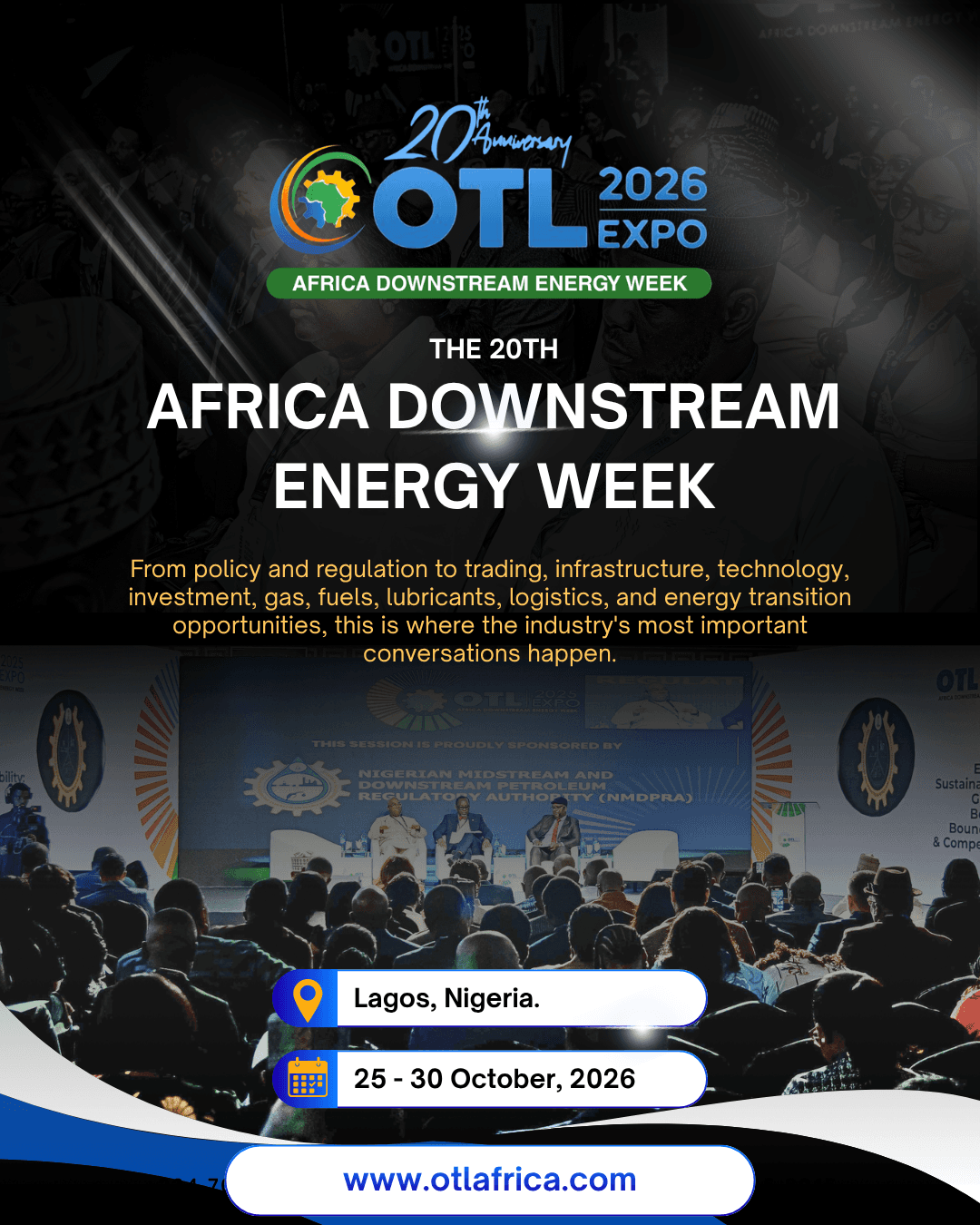
OTL Africa Downstream Energy Week returns to Lagos for its 20th Anniversary edition, running from 25 to 30 October 2026 at the Oriental Hotel, Victoria Island. For two decades, the event has brought together the people who build, regulate and finance Africa's downstream and midstream energy sector, and this year's edition arrives as the continent works to close a refining investment gap OPEC estimates at $92 billion through 2050.
OTL Africa is expected to draw approximately 3,000 attendees, including managing directors, chief executives, policymakers, regulators, financiers and service providers from across Africa and beyond. The programme covers refining, oil trading, shipping, tank storage, logistics, petroleum marketing and retail, LPG, lubricants, petrochemicals, power, financial services and energy technology, combining a strategic conference, a trade and services exhibition and high-level networking sessions.
"For over two decades, OTL Africa has played a key role in fostering dialogue among stakeholders in the energy sector, promoting best practices, and supporting initiatives that enhance efficiency, investment flows and policy coherence across Africa's downstream petroleum industry," said Joyce Akabogu, Chief Executive Officer of OTL Africa.
The timing gives the 2026 edition added weight. Nigeria's Dangote Refinery, which reached 700,000 barrels per day during a performance test in June, exceeding its 650,000 bpd nameplate capacity, has driven a 13.5 per cent rise in Africa's secondary refining capacity since January 2025, according to OPEC. With Africa's refined product imports projected to climb from 2 million to 3.4 million barrels per day by 2050 without further investment, the conversations at OTL carry direct relevance to how that gap gets closed, and who gets to close it.
Registration is open across three categories. Virtual delegates ($200 or ₦300,000) get online access to conference sessions, the exhibition hall and conference papers, with an option to upgrade to Premium. Classic delegates ($950 or ₦1,425,000, 10 per cent off until 31 July) attend in person with session access, exhibition hall entry, tea breaks and lunch, conference materials, fast-track accreditation and eligibility for live interviews. Premium delegates ($1,200 or ₦1,800,000, also 10 per cent off until 31 July) receive all Classic benefits plus premium seating, an industry dinner, a post-event city tour and a closing cocktail and concert. All in-person delegates receive a certificate of attendance.
For more information or to register, visit otlafrica.com.