

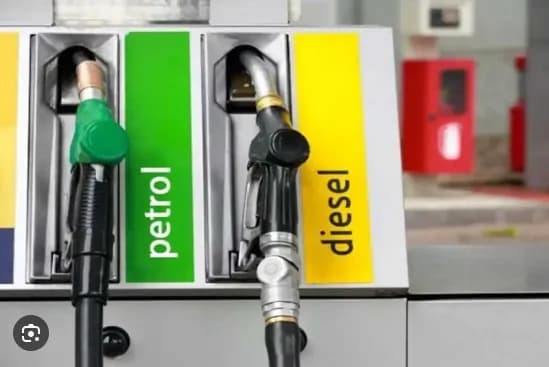
Nigeria, Africa’s top oil producer, will impose a 5% tax on all fossil fuel sales starting January 2026 under its new tax law.
The law states that Nigerians must pay a “5% surcharge chargeable on fossil fuel products provided or produced in Nigeria.” According to the regulation, this fee “shall be collected at the time of a chargeable transaction, meaning at the point of sale.” The surcharge exempts clean or renewable energy, household kerosene, cooking gas, and compressed natural gas.
By design, the policy places a direct price on fossil fuel consumption and aims to shift demand toward cleaner energy sources. It functions like a carbon tax, though framed as a percentage rather than a fixed cost. Globally, carbon taxes disincentivize fossil fuel use while raising government revenue—often described as the “double dividend” of carbon pricing.
The government deserves credit for embedding the surcharge within broader tax reforms, similar to Sweden’s 1990s carbon tax model. Integrating it into a wider fiscal package reduces backlash, protects it from early repeal, and ensures alignment with other regulations.
Rising Solar Adoption Shows Policy Potential
Nigeria’s 5% surcharge represents a bold move to break its decades-long dependence on fossil fuels. If implemented effectively, the policy could decouple growth from emissions, strengthen Nigeria’s climate commitments, and mobilize funds for sustainable development.
It follows the fuel subsidy removal two years ago, which, alongside higher electricity tariffs, accelerated renewable adoption. Solar capacity surged in 2024, pushing Nigeria to fourth place in Africa after adding 63.5 MWp and reaching 385.7 MWp in total capacity as households sought cheaper alternatives.
Concerns Over Flat Tax and Inequality
Yet, the policy has flaws. A flat 5% rate disregards deep inequality in a country where millions of households and SMEs rely on petrol generators. A progressive surcharge that scaled with income or consumption levels would better protect vulnerable groups.
Equally troubling is the absence of a revenue utilization framework. Unlike Sweden or British Columbia, which recycled carbon tax revenue into rebates and tax cuts, Nigeria’s 2025 Tax Act offers no direct cushioning measures. Citizens risk seeing the surcharge as another revenue grab unless the government commits to transparency.
Revenue Could Fuel Climate Financing
Revenue from the surcharge could support the implementation of the Climate Change Act of 2021, fund the National Climate Change Council Secretariat, or finance adaptation projects, clean technology, and green jobs.
The IPCC estimates developing countries, excluding China, need $2.4 trillion annually for climate and nature investments by 2030, plus $3 trillion more for other SDGs. Nigeria cannot bridge this gap without innovative domestic measures. Properly managed, the surcharge could jumpstart climate financing while signaling a decisive shift from fossil fuels.
Denmark’s experience shows the power of price incentives: in 2024, electric vehicles outsold all other cars thanks to policies that made them cheaper than fossil-fuel alternatives. Nigeria can achieve similar results if it manages this policy well.
For decades, the nation has remained dependent on fossil fuels. But fossil fuels are not the future. This 5% surcharge may be the external force that finally pushes Nigeria toward a sustainable path. Like the butterfly effect, the long-term gains could far outweigh the short-term pain—if the government resists the temptation to squander this opportunity.