

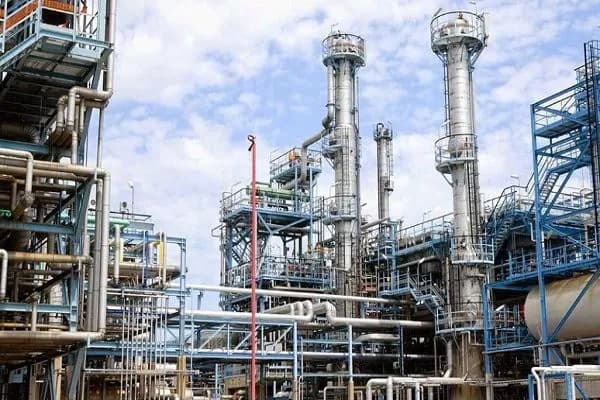
The global oil refining landscape is shaped by mega-refineries with massive processing capabilities, each exceeding 500,000 barrels per day (bpd). These industrial giants not only fuel national economies but also influence regional trade flows, export dynamics, and global market pricing. Below is a comprehensive ranking of the ten largest operational crude oil refineries in 2025, based on reported processing capacities, strategic roles, and technical sophistication.
1. Jamnagar Refinery – Reliance Industries (India)
- Location: Gujarat, India
- Operator: Reliance Industries
- Capacity: 1.24–1.40 million bpd
Commissioned in 1999, Jamnagar is the world’s largest single-site refinery. With a Nelson Complexity Index of ~21.1, it features deep conversion units and advanced petrochemical integration. It anchors India’s refining hub, exporting fuels and chemicals globally.
2. Paraguaná Refinery Complex – PDVSA (Venezuela)
- Location: Falcón, Venezuela
- Operator: PDVSA
- Capacity: ~955,000 bpd
This complex merges the Amuay and Cardón refineries. Though underutilized due to infrastructure and political challenges, its scale makes it the second-largest globally. It remains pivotal to Venezuela’s export strategy.
3. Ulsan Refinery – SK Energy (South Korea)
- Location: Ulsan, South Korea
- Operator: SK Energy
- Capacity: ~840,000 bpd
Founded in 1964, Ulsan has grown into Asia’s second-largest refinery. It is integrated with petrochemical production and exports gasoline and jet fuel across Asia and Europe.
4. Ruwais Refinery – ADNOC (UAE)
- Location: Abu Dhabi, UAE
- Operator: ADNOC Refining
- Capacity: ~837,000 bpd
Comprising East and West plants, Ruwais is a key refining asset in the Middle East. It’s tightly linked with downstream petrochemical facilities and can process high-sulphur, heavy crude.
5. Yeosu Refinery – GS Caltex (South Korea)
- Location: Yeosu, South Korea
- Operator: GS Caltex
- Capacity: ~730,000 bpd
Built through incremental upgrades, Yeosu features sophisticated conversion units and is central to South Korea’s domestic and regional supply of refined and specialty products.
6. Onsan Refinery – S-Oil (South Korea)
- Location: Ulsan, South Korea
- Operator: S-Oil (Saudi Aramco affiliate)
- Capacity: ~669,000 bpd
This highly modern facility supports both fuel and petrochemical demand across Asia. It features bunker-cracking and reforming technology, serving as a key export hub.
7. Dangote Petroleum Refinery – Dangote Group (Nigeria)
- Location: Lagos, Nigeria
- Operator: Dangote Group
- Capacity: 650,000 bpd (expanding to 700,000 bpd by end-2025)
Africa’s largest refinery and the world’s largest single-train unit, Dangote, has transformed Nigeria into a net refined products exporter. Integrated with a power plant, port, and fertilizer complex, it now dominates regional supply chains.
8. Galveston Bay Refinery – Marathon Petroleum (USA)
- Location: Texas City, Texas
- Operator: Marathon Petroleum
- Capacity: 631,000 bpd
The second-largest U.S. refinery, this site combines high-capacity units with an export focus. It supplies fuels, petrochemical feedstocks, and lubricants across North America and beyond.
9. Port Arthur Refinery – Motiva Enterprises (USA)
- Location: Port Arthur, Texas
- Operator: Motiva (Saudi Aramco)
- Capacity: ~630,000 bpd
One of the most advanced and flexible refineries in the U.S., it processes both light and heavy crude and plays a vital role in Saudi Aramco’s global refining strategy.
10. Al-Zour Refinery – KIPIC (Kuwait)
- Location: Al-Zour, Kuwait
- Operator: KIPIC (Kuwait Petroleum Corporation)
- Capacity: 615,000 bpd
Commissioned between 2022 and 2023, Al-Zour is the Middle East’s newest mega-refinery. With advanced catalytic units and petrochemical integration, it boosts Kuwait’s export capabilities and fuel self-sufficiency.
Global Fuel Engines
These ten refineries represent the pinnacle of global refining capacity and technological integration. From India’s Jamnagar and Nigeria’s Dangote to the U.S. Gulf Coast and South Korea’s industrial clusters, each site exemplifies how scale and complexity drive modern fuel and petrochemical supply chains. As global energy demand evolves, these refineries will continue to shape pricing, trade, and sustainability efforts across continents.